Screw and Barrel Materials Guide: 38CrMoAl, D2, AISI316 and Hardness Specs
Screw and barrel material selection is the specification decision that most reliably predicts how many years a plasticating unit will run before it needs to be replaced. On extrusion, injection molding and rubber lines, three material names dominate specification sheets — 38CrMoAl (1.8509) nitriding steel, D2 cold-work tool steel, and AISI316 stainless steel — and they are normally paired with one of two hardness routes: a nitrided case expressed in HV, or a bimetallic alloy layer expressed in HRC.
This guide is written for buyers, process engineers and maintenance managers who have already passed the "which type of screw barrel" stage and now need to lock down a material grade and a hardness specification. It explains what each material actually does, how to read the hardness numbers inside a quotation, and how the choice maps onto real machinery — from conical twin screw barrels sized Φ25/50–Φ185/340 for PVC extrusion to parallel twin screw barrels sized Φ45–Φ350 for compounding and pelletizing.
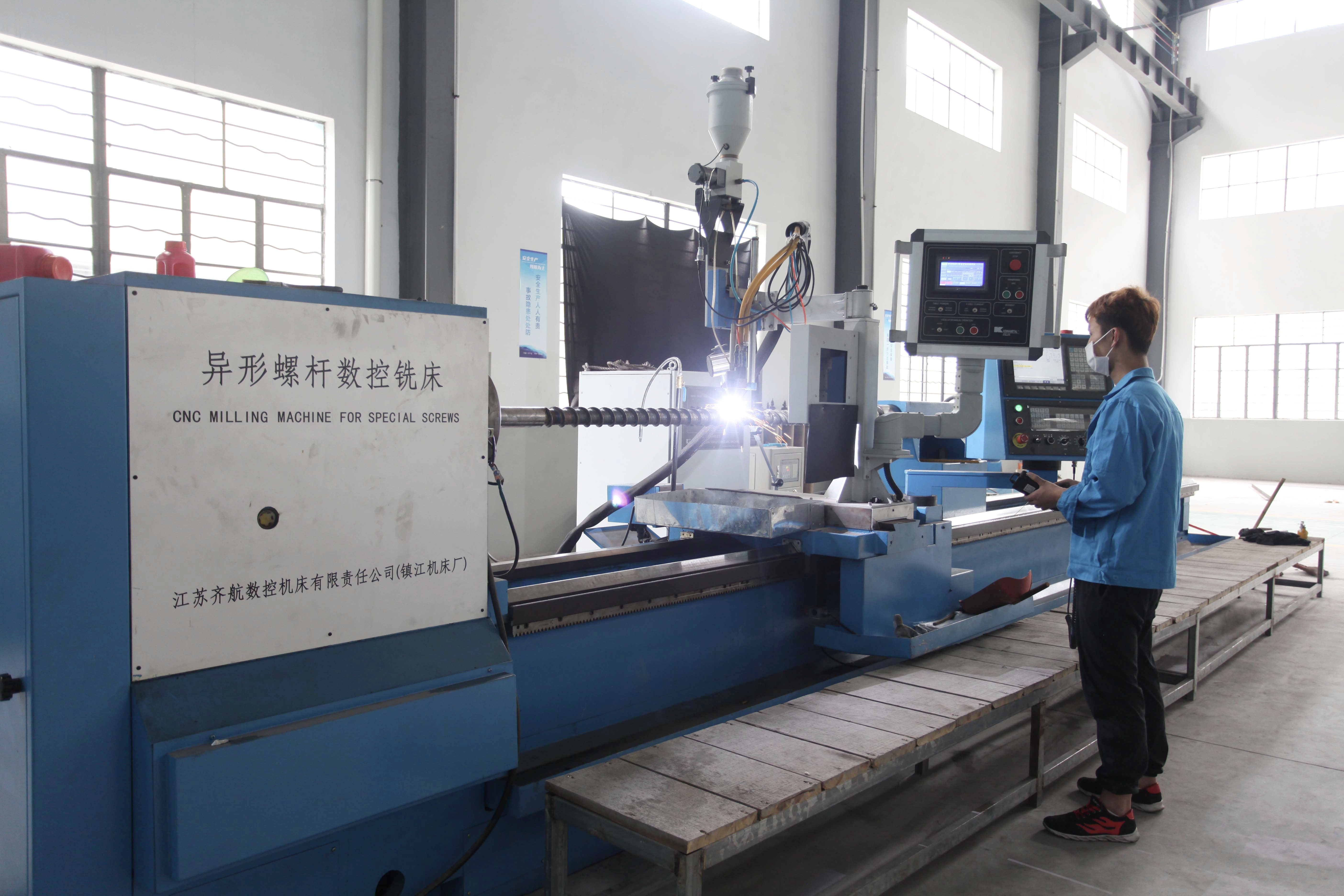
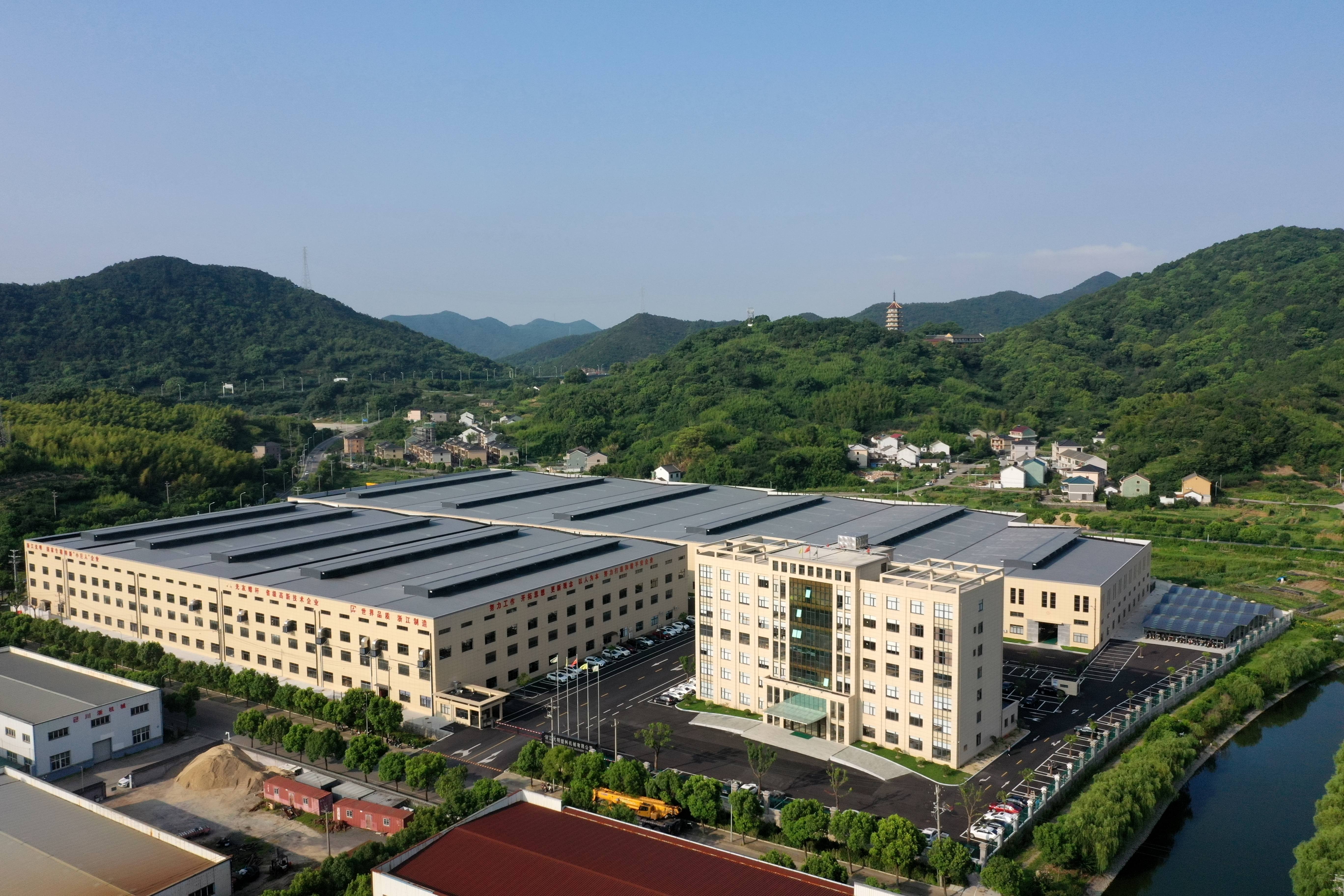
Guangyou Screw (Zhejiang Guangming Plastics Machinery Co., Ltd.) machines and heat treats screw and barrel materials in a 100,000+ m² facility in Zhoushan, China.
Problem Definition: Why the Same Material Grade Produces Two Very Different Service Lives
A screw and barrel pair fails for one of three reasons, and each reason points to a different material decision. Abrasive fillers such as glass fiber, mineral fillers and high-load CaCO3 grind away the flight and barrel wall. Corrosive chemistry — the hydrogen chloride released during PVC processing, halogenated flame retardants, and acidic residues found in recycled streams — attacks the metal surface. High torque on a long, slender screw shaft can fracture the shaft outright if the steel and heat treatment are not matched to the joint stress limits.
Guangyou Screw's risk-control documentation names two of these failure modes directly and describes how they are engineered against:
- Premature wear and chemical corrosion — controlled through metallurgical alloy coating and precise nitriding treatment. The company applies fully automatic plasma rotary alloy spraying (PTA) to achieve a bimetallic layer hardness of HRC 58–65, which is the reason its barrels hold up when processing corrosive additives or fiber fillers.
- Screw shaft fracture under high torque — controlled through optimized steel selection and heat treatment matched to joint stress limits. Premium alloys such as 38CrMoAlA or SKD61 are quenched, tempered and internally stress-relieved to maximize torsional strength.
The commercial consequence is simple and often underestimated: a material grade is not a cost line on a quotation, it is a replacement-cycle decision. Two screw barrels quoted at different prices can produce the same number of kilograms of product per year while delivering very different numbers of years in service. That is why the material discussion belongs in the specification stage, not in the spare-parts stage.
Industry Background: A Larger, Harder-Working Installed Base
The installed base of plasticating equipment keeps growing, and the material it has to process keeps getting more aggressive. According to Grand View Research, the global plastic processing machinery market reached USD 25.9 billion in 2025, with injection molding machines accounting for 50.9% of that market. Global Insight Services projects the feed screw barrel market itself growing from USD 1.89 billion in 2024 to USD 3.33 billion by 2034, a CAGR of 5.8%. Fortune Business Insights places single-screw extrusion machinery at approximately 62% of the extrusion market as of 2024, and Dataintelo estimates the global bimetallic barrel and screw market at USD 2.8 billion in 2025, forecast to reach USD 4.7 billion by 2034. Published market-size estimates vary by source depending on how much peripheral equipment is included, so these figures are best read as direction rather than as a single precise number.
Two structural shifts sit behind the growth in bimetallic demand. The first is recycling: post-consumer streams carry abrasive and corrosive contamination that virgin resin does not. The second is higher filler loading in PVC, WPC and SPC formulations, where mineral content is used for cost and dimensional stability but accelerates metal loss. Both shifts push buyers away from a single default material and toward a graded material portfolio.
Detailed Solution: The Material Portfolio Behind the Screw and Barrel Range
38CrMoAl (1.8509): The Nitriding Baseline
38CrMoAl, standardised as 1.8509, is an aluminium-bearing nitriding steel. Its value in a screw or barrel comes from the fact that nitriding diffuses nitrogen into the surface and creates a very hard case while the core stays tough enough to carry torque. Industry references for plasticating screws in 38CrMoAl place the nitrided case at roughly 0.4–0.6 mm with a surface hardness of 900–1,100 HV. Guangyou Screw's published product specification for its nitrided screws and barrels states a nitrided hardness of HV850–1000 and a nitrided case depth of 0.45–0.7 mm, alongside a hardness after hardening and tempering of HB260–310 and a nitrided brittleness of less than Grade 2. In practice 38CrMoAl is the correct starting point for standard PVC, PE and PP extrusion and for general injection molding service where neither extreme abrasion nor aggressive chemistry dominates.
D2: Wear Resistance for Abrasive Compounds
D2 is a cold-work tool steel chosen when the dominant threat is abrasion rather than chemistry. It is specified for screws and barrels running filled and reinforced compounds — glass-fiber reinforced grades, mineral-filled PVC, and recycled streams whose contamination behaves like a mild abrasive. Because D2 is consumed by wear in the same way any steel is, the practical question is not whether it will wear but at what rate, and that rate is what determines how often the screw has to leave the machine.
AISI316: Corrosion Resistance Where Chemistry Is the Enemy
AISI316 is an austenitic stainless steel used where the polymer chemistry, not the filler, is doing the damage. PVC compounds, halogenated additive packages, and chemical residues in recycled material are the typical triggers. AISI316 is not selected for maximum hardness; it is selected because the surface must resist chemical attack over a long period. For more severe environments Guangyou Screw's material portfolio extends into nickel and specialty alloys — Inconel 718, Inconel 625, Hastelloy C-276, Monel 400 and Monel 500 — which are specified when neither a nitrided steel nor standard stainless steel is sufficient.
The Extended Alloy Range Available Across the Product Lines
Beyond the three headline grades, the material portfolio published for Guangyou Screw's screw and barrel lines includes: 38CrMoAl (1.8509), 34CrAlNi7 (1.8550), 31CrMoV9 (1.8519), D2, DC53, SKD11, SKD61, S600, Gr12MoV, 9Cr18MoV, 42CrMo, 40CrNiMo, 40Cr, C45, AISI316, AISI420, AISI304, 440C, 17PH-4, 1.2316, 1.4122, 1.4404, 1.4462, Inconel 718, Inconel 625, Hastelloy C-276, Monel 400 and Monel 500. The list matters commercially: it means a buyer can specify a screw and barrel set for a standard line and a second set for a highly filled or highly corrosive line, from the same supplier and with the same dimensional standards.
Hardness Routes: Nitriding, Chromium Plating and PTA Bimetallic
Material grade alone does not define performance; the surface treatment that accompanies it does. The published Guangyou Screw specification for its screw and barrel products covers all three routes:
- Hardening and tempering: HB260–310 as the base condition before surface treatment.
- Nitriding: HV850–1000 surface hardness, 0.45–0.7 mm case depth, brittleness less than Grade 2.
- Chromium plating after nitriding: plating hardness ≥900 HV with a plating depth of 0.025–0.10 mm.
- PTA bimetallic alloy layer: alloy hardness HRC50–65 in the product specification, with the alloy depth at 0.8–2.0 mm; the bimetallic layer produced by the fully automatic plasma rotary alloy spraying process is specified at HRC 58–65.
- Dimensional controls that apply regardless of material: surface roughness Ra 0.4 and screw straightness 0.015 mm.
For context, bimetallic barrels in the wider industry are frequently produced with a centrifugally cast boron-nickel-chromium alloy liner of about 1.5–3.0 mm thickness. PTA spraying is an alternative route that deposits the alloy layer directly, and it is the route Guangyou Screw uses to reach the HRC 58–65 bimetallic layer referenced above.
Material grade, case depth and hardness are verified before shipment on every screw and barrel order.
Mapping Materials to Product Models
The same material portfolio is offered across each of the company's screw and barrel lines, which makes the size range the second half of the specification decision.
| Product line | Size range | Typical process | Material options |
|---|---|---|---|
| Conical Twin Screw Barrel | Φ25/50–Φ185/340 | PVC extrusion (construction materials) | 38CrMoAl (1.8509), D2, AISI316 and the extended alloy range |
| Parallel Twin Screw Barrel | Φ45–Φ350 | Compounding and pelletizing, plastic recycling | 38CrMoAl (1.8509), D2, AISI316 and the extended alloy range |
| Single Screw Extruder Screw and Barrel | Φ20–Φ500 | Film blowing and pipe extrusion | 38CrMoAl (1.8509), D2, AISI316 and the extended alloy range |
| Injection Molding Machine Screw and Barrel | Φ20–Φ300 | Plastic injection molding | 38CrMoAl (1.8509), D2, AISI316 and the extended alloy range |
| Rubber Machine Screw and Barrel | Φ20–Φ650 | Rubber extrusion | 38CrMoAl (1.8509), D2, AISI316 and the extended alloy range |
Step-by-Step Breakdown: How to Select a Material and Hardness Specification
- Characterise the polymer, not just the product. Write down the base resin, the filler type and loading, the additive package, and whether the stream contains recycled material. Abrasion risk, corrosion risk and torque load all follow from this description.
- Name the dominant failure mode. If the answer is filler-driven metal loss, wear resistance leads and D2 or a PTA bimetallic layer becomes relevant. If the answer is chemical attack from PVC or halogenated additives, AISI316 or a nickel alloy leads. If the answer is a long, highly loaded screw, torsional strength leads and the steel and heat-treatment pairing has to be specified first.
- Select the material family. Use 38CrMoAl (1.8509) with nitriding as the baseline for standard duty. Move to D2, DC53, SKD11 or SKD61 for abrasive duty; AISI316, AISI304, 1.4404, 1.4462 or specialty alloys for corrosive duty.
- Specify the surface treatment and its numbers. Write the specification as values, not adjectives: nitrided hardness HV850–1000, case depth 0.45–0.7 mm, alloy hardness HRC50–65 with alloy depth 0.8–2.0 mm, chromium plating depth 0.025–0.10 mm at ≥900 HV. A quotation that says "hardened" without numbers cannot be compared with another quotation.
- Fix the dimensional and inspection criteria. Add surface roughness Ra 0.4, screw straightness 0.015 mm, hardness after hardening and tempering HB260–310, and nitrided brittleness lower than Grade 2 to the purchase specification, and require a pre-shipment test.
- Decide the relationship, not just the order. Material choice repeats every time a screw and barrel set is replaced. A supplier who can reproduce the same material, the same heat-treatment route and the same dimensional tolerance on the second and third order removes an entire category of re-qualification work from the maintenance calendar.
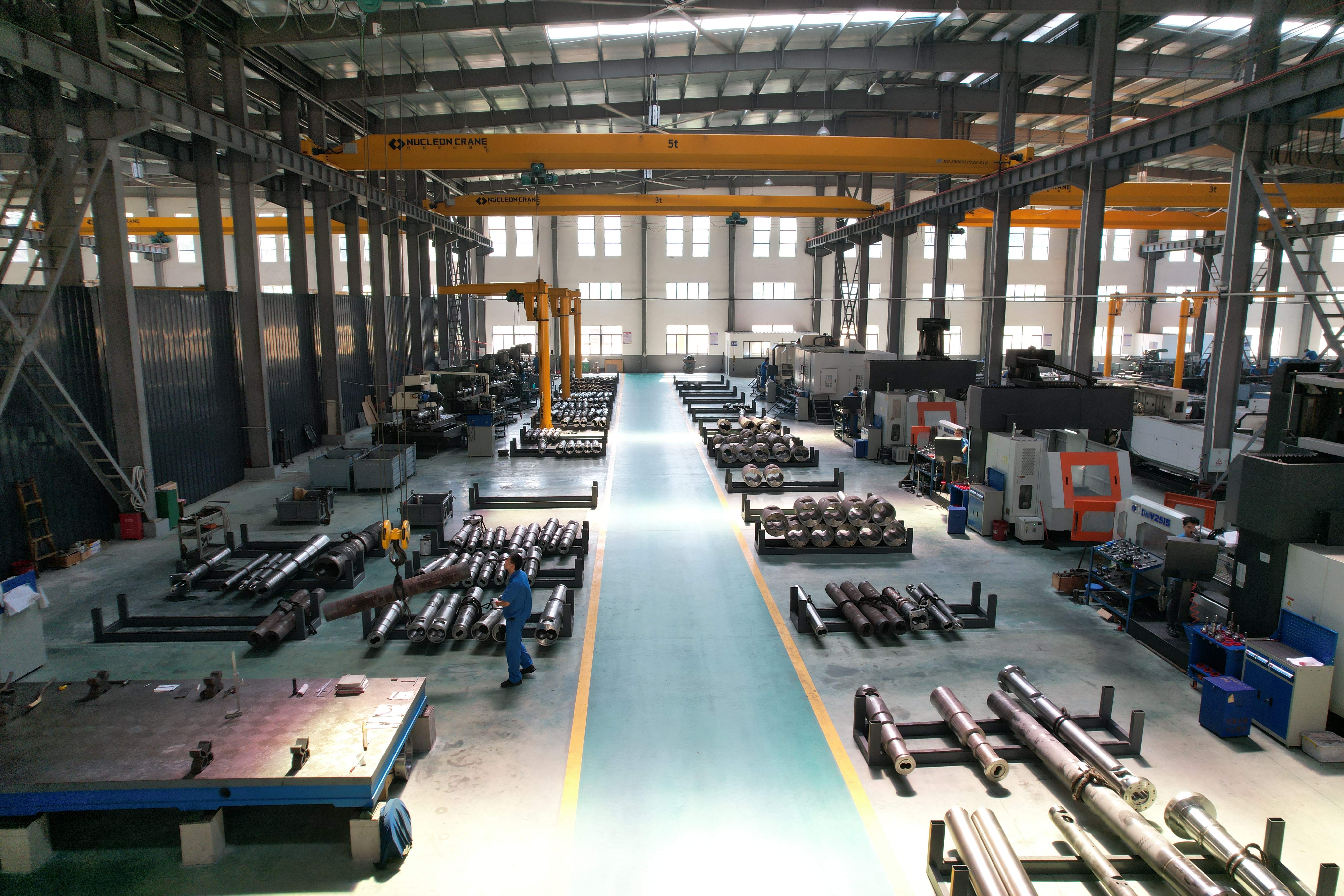
Single, twin and bimetallic screw barrels are produced across a Φ20–Φ650 size span covering extrusion, injection and rubber lines.
Use Cases: Matching Material to Real Processing Lines
PVC pipe and profile extrusion on conical twin screws
PVC releases corrosive hydrogen chloride during processing, so the corrosion route matters as much as the wear route. Conical twin screw barrels sized Φ25/50–Φ185/340 are the standard geometry for this duty. A 38CrMoAl screw barrel with controlled nitriding and optional chromium plating is the baseline; where calcium carbonate loading is high, a bimetallic option is worth the specification discussion.
WPC, SPC and high-filler PVC
Wood-plastic and stone-plastic composites carry heavy mineral loads, and the abrasive wear is continuous rather than occasional. This is the clearest case for a PTA bimetallic layer at HRC 58–65 with an alloy depth of 0.8–2.0 mm.
Compounding and pelletizing with glass-fiber PA66 and recycled plastics
Parallel twin screw barrels sized Φ45–Φ350 run some of the most abrasive duty in the plant: high glass-fiber PA66 and recycled streams containing both contamination and chemical residue. The documented comparison case for bimetallic construction names exactly these materials — recycled plastics, high glass-fiber PA66 and high-filler PVC/CaCO3 — as the applications where the bimetallic route shows its advantage.
Film blowing and pipe extrusion on single screws
Single screw extruder screws and barrels from Φ20 to Φ500 cover film blowing and pipe extrusion, where the resin is normally cleaner than in compounding but the running hours are long. Consistent nitriding depth and straightness (0.015 mm) matter more here than exotic alloys.
Injection molding with corrosive additive packages
Injection molding machine screws and barrels from Φ20 to Φ300 frequently process flame-retardant and other additive packages that attack the surface. Where corrosion, rather than abrasion, drives the failure, AISI316 or a specialty alloy is the appropriate specification.
Rubber extrusion
Rubber machine screws and barrels from Φ20 to Φ650 are specified with the same material and hardness framework, with the added consideration that rubber compounds and their curing additives place different demands on surface chemistry than thermoplastics.
Comparison Tables: Material and Hardness Trade-Offs
Table 1 — The three headline materials
| Material | Nature of the material | Primary reason to specify it | Typical duty |
|---|---|---|---|
| 38CrMoAl (1.8509) | Aluminium-bearing nitriding steel | Hard nitrided case over a tough, torque-carrying core | Standard extrusion and injection duty; PVC, PE, PP |
| D2 | Cold-work tool steel | Wear resistance under abrasive fillers | Glass-fiber reinforced and mineral-filled compounds, recycled streams |
| AISI316 | Austenitic stainless steel | Corrosion resistance against aggressive polymer chemistry | PVC compounds, halogenated additive packages, corrosive residues |
Table 2 — Nitrided versus PTA bimetallic construction
| Comparison dimension | Nitrided screw and barrel (38CrMoAl) | Bimetallic screw and barrel (PTA alloy layer) |
|---|---|---|
| Surface hardness | Nitrided hardness HV850–1000 (industry reference for 38CrMoAl: 900–1,100 HV) | Alloy hardness HRC50–65 in the product specification; PTA bimetallic layer specified at HRC 58–65 |
| Case / layer depth | Nitrided case depth 0.45–0.7 mm (industry reference for 38CrMoAl: 0.4–0.6 mm) | Alloy depth 0.8–2.0 mm |
| Wear and corrosion performance | Baseline construction for standard duty | Superior wear and corrosion resistance, with lifespan extended by 2–3 times and wear rate reduced by over 60% |
| Best suited to | Standard PVC, PE and PP processing and general extrusion duty | Highly abrasive materials: recycled plastics, high glass-fiber PA66, high-filler PVC/CaCO3 |
| Initial cost | Lower initial cost | Approximately 25% higher initial cost |
| Total cost of ownership | Replacement cycles follow the wear rate of the nitrided case | Total cost of ownership reduced by 50% over three years because fewer replacements are required |
| Maintenance impact | Planned replacement intervals | Zero unscheduled downtime for replacements, which reduces maintenance labour and production loss |
| Output stability | Standard extrusion consistency | Maintains stable output pressure and 15% higher extrusion consistency over long-term operation |
FAQ
How can I verify the material grade and hardness of a screw and barrel before it ships?
Verify against written values rather than descriptions. Guangyou Screw's product specification states hardness after hardening and tempering of HB260–310, nitrided hardness of HV850–1000, nitrided case depth of 0.45–0.7 mm, nitrided brittleness below Grade 2, surface roughness of Ra 0.4, screw straightness of 0.015 mm, chromium plating depth of 0.025–0.10 mm with plating hardness of ≥900 HV after nitriding, and alloy hardness of HRC50–65 at an alloy depth of 0.8–2.0 mm. For comparison, industry references for 38CrMoAl nitriding place the case at 0.4–0.6 mm and the surface hardness at 900–1,100 HV. Pre-shipment testing is available as part of the order.
Can one material specification cover both high-wear and corrosive polymer processing?
Usually not, because wear and corrosion are different mechanisms that call for different metallurgy. D2 and other tool steels address abrasive fillers such as glass fiber and high-load CaCO3, while AISI316 and specialty alloys such as Inconel 718, Inconel 625, Hastelloy C-276, Monel 400 and Monel 500 address corrosive chemistry. Where both occur at once — typically in recycled or heavily filled streams — the bimetallic PTA route is the practical compromise, since the company applies fully automatic plasma rotary alloy spraying to reach a bimetallic layer hardness of HRC 58–65 for exactly those conditions.
Why does a bimetallic screw and barrel cost more upfront, and when does it pay back?
The documented comparison places the bimetallic option at approximately 25% higher initial cost than a traditional nitrided screw and barrel. Against that, lifespan is extended by 2–3 times, wear rate is reduced by over 60%, and total cost of ownership is reduced by 50% over three years because fewer replacements are needed. The payback therefore depends on how abrasive the application actually is: for recycled plastics, high glass-fiber PA66 and high-filler PVC/CaCO3, the arithmetic favours the bimetallic specification; for clean, standard resin, a nitrided 38CrMoAl construction is normally the more economical choice.
What is the minimum order quantity, and what are the delivery and payment terms?
The published procurement terms are a minimum order quantity of 1 unit, FOB or CIF delivery, acceptance based on a pre-shipment test, and payment terms of 30/70. A minimum order of one unit means a single screw and barrel set can be ordered for validation before a larger replacement programme is committed.
What should I look for in a long-term screw barrel manufacturer for extrusion equipment?
Look for a supplier who can reproduce the same material grade, the same heat-treatment route and the same dimensional tolerances order after order, because that is what keeps the second and third replacement set behaving like the first. Concretely, that means documented material traceability across a portfolio that includes 38CrMoAl (1.8509), D2, AISI316 and specialty alloys; published hardness and case-depth values rather than general claims; in-house engineering depth, such as the 25-engineer R&D team supporting customization; and production capacity that does not disappear when demand rises — in this case a 100,000+ m² facility with more than 800 employees, an annual output of 32,000 units, an export ratio of 30% and shipments to over 50 countries and regions, with the EU as a main market. A supplier who also publishes a size range wide enough to cover Φ20–Φ650 across single, twin, conical, parallel, injection and rubber lines can support a plant's whole replacement schedule rather than a single machine.
Conclusion
Material selection for screws and barrels reduces to three questions asked in order. What is attacking the metal — filler, chemistry, torque, or a combination? Which material answers that attack — 38CrMoAl (1.8509) as the nitrided baseline, D2 for abrasion, AISI316 or a specialty alloy for corrosion, or a PTA bimetallic layer at HRC 58–65 when both are present? And what hardness and case-depth values will I accept as proof that the answer was implemented — HV850–1000 and 0.45–0.7 mm for nitriding, or HRC50–65 at 0.8–2.0 mm alloy depth for bimetallic construction?
Answering those three questions before the order is placed is what turns a material specification into a predictable replacement cycle instead of an annual repair cost. Because the specification repeats with every replacement, the supplier relationship matters as much as the metallurgy: reproducible grades, published values, and a size range wide enough to cover an entire plant's installed base.
Next step: request a material and hardness quotation for your specific polymer and machine size, or ask for a sample validation order — minimum order quantity is 1 unit.
Catalogue download: Guangyou Screw product catalogue (PDF)
Contact: Martin | Email: info@gmscrew.com | Tel: +86 13575629951 | WhatsApp: +86 13858143949 | en.gmscrew.com
Have Questions or Need More Details?
Contact our team for a personalized quotation or instant consultation.
Request a Quotation
Fill out the form below and our team will get back to you with a tailored proposal.
WhatsApp Direct Chat
Prefer to chat in real-time? Message us on WhatsApp for instant assistance & quick answers.
- Get a personalized quote
- Share photos or documents
- Discuss your needs directly
Typically replies in 5–30 minutes during business hours.