Screw and Barrel Explained: Core Components in Plastic Extrusion and Injection Molding
A screw and barrel system is the plastication unit of a plastic extrusion or injection molding machine: the barrel is the heated, pressure-rated cylinder, and the screw is the rotating, flighted shaft inside it that conveys, melts, mixes, and pressurizes polymer. These two parts touch the melt continuously — from the feed throat to the die on an extruder, or from the hopper to the nozzle on an injection unit — which is why their diameter, geometry, and material grade influence output quality and service life more than almost any other machine component.
If you are new to plastics machinery, the vocabulary around screws and barrels is often the first real obstacle: single versus twin, conical versus parallel, nitrided versus bimetallic. This explainer builds the conceptual baseline first — what the parts are, what the five product families do, and which baseline specifications are worth recognising — so that later technical or procurement documents make sense.
What a Screw and Barrel System Actually Is
A barrel is a cylindrical, heat-resistant tube with a precisely bored internal diameter. It carries heating elements along its length and, in many designs, cooling arrangements; its job is to hold the screw in alignment and contain the pressure generated inside. Barrel bore size, wall thickness, and surface treatment are specified together because they determine how much pressure the assembly can hold and how long it resists wear.
A screw is a helical shaft whose flight depth and pitch change along its length. In a conventional single screw, three functional zones are usually described: a feed zone that accepts and conveys solid pellets or powder, a compression zone where the material is compacted and melted, and a metering zone that stabilises flow and pressure before the polymer exits. Twin screws use two flights running together, which changes how the material is mixed and conveyed.
The two parts work as a matched set. Screw outside diameter and barrel bore are specified with defined clearances, and surface treatments on both sides are usually paired — a nitrided screw with a nitrided barrel, for example. Replacing one half of the pair without the other is technically possible, but it normally costs performance and shortens the life of the new part.
The wider assembly also includes the feed section, barrel flange and connections, and — on injection units — the non-return valve and nozzle. For a newcomer, though, the screw and the barrel are the two components that decide what happens to the polymer inside the machine.
Why These Two Parts Set the Ceiling on Output Quality
Screw and barrel sets are consumable, replaceable components, which is why a component market exists alongside the machine market. The feed screw barrel market was estimated at USD 1.89 billion in 2024 and is projected to reach USD 3.33 billion by 2034, a compound annual growth rate of 5.8% (Global Insight Services). Those components sit inside a much larger equipment category: the global plastic processing machinery market reached USD 25.9 billion in 2025, with injection molding machines accounting for 50.9% of that market share (Grand View Research, 2025).
The technology mix is just as informative. Single-screw extrusion machinery holds approximately 62% of the extrusion market as of 2024 (Fortune Business Insights), which matches what you see on most factory floors — pipe, profile, sheet, and film lines running a single screw. Twin-screw configurations take over where mixing and compounding quality matter more than simple throughput.
Material trends point the same way. The global bimetallic barrel and screw market is estimated at USD 2.8 billion in 2025 and forecast to reach USD 4.7 billion by 2034 (Dataintelo), a signal that abrasive and corrosive formulations are pushing buyers toward lined, wear-resistant components rather than plain nitrided steel.
For anyone evaluating a machine or a replacement part, the practical conclusion is straightforward: the screw and barrel are among the parts most likely to be replaced during a machine's working life, and the choice of geometry and material determines how often that replacement happens.
The Five Screw and Barrel Families and What Each One Does
Most of the terminology you meet in quotations and datasheets maps onto five product families. Each family exists because a different polymer form, mixing requirement, or machine type calls for different screw geometry. The table below is the quick orientation map; the notes that follow explain the role of each family.
| Product family | Diameter range | Process type | Typical industry |
|---|---|---|---|
| Single Screw Extruder Screw And Barrel | Φ20–Φ500 | Film blowing / pipe extrusion | Plastics packaging & pipe manufacturing |
| Parallel Twin Screw Barrel | Φ45–Φ350 | Compounding & pelletizing | Plastic recycling & compounding |
| Conical Twin Screw Barrel | Φ25/50–Φ185/340 | PVC extrusion | Plastics machinery / construction materials |
| Injection Molding Machine Screw And Barrel | Φ20–Φ300 | Plastic injection molding | Automotive, electronics & toy manufacturing |
| Rubber Machine Screw And Barrel | Φ20–Φ650 | Rubber extrusion | Tire & rubber product manufacturing |
1. Single Screw Extruder Screw And Barrel (Φ20–Φ500)
The single screw is the most common geometry in extrusion: one rotating screw with a continuous helical flight conveys and plasticizes the polymer, then pushes it through a die. Its primary roles are conveying and plasticizing, with moderate mixing created by the compression and metering zones. Diameter coverage runs from Φ20 to Φ500, spanning laboratory and small profile lines up to large pipe and sheet extrusion. Typical applications are film blowing and pipe extrusion in plastics packaging and pipe manufacturing.
2. Parallel Twin Screw Barrel (Φ45–Φ350)
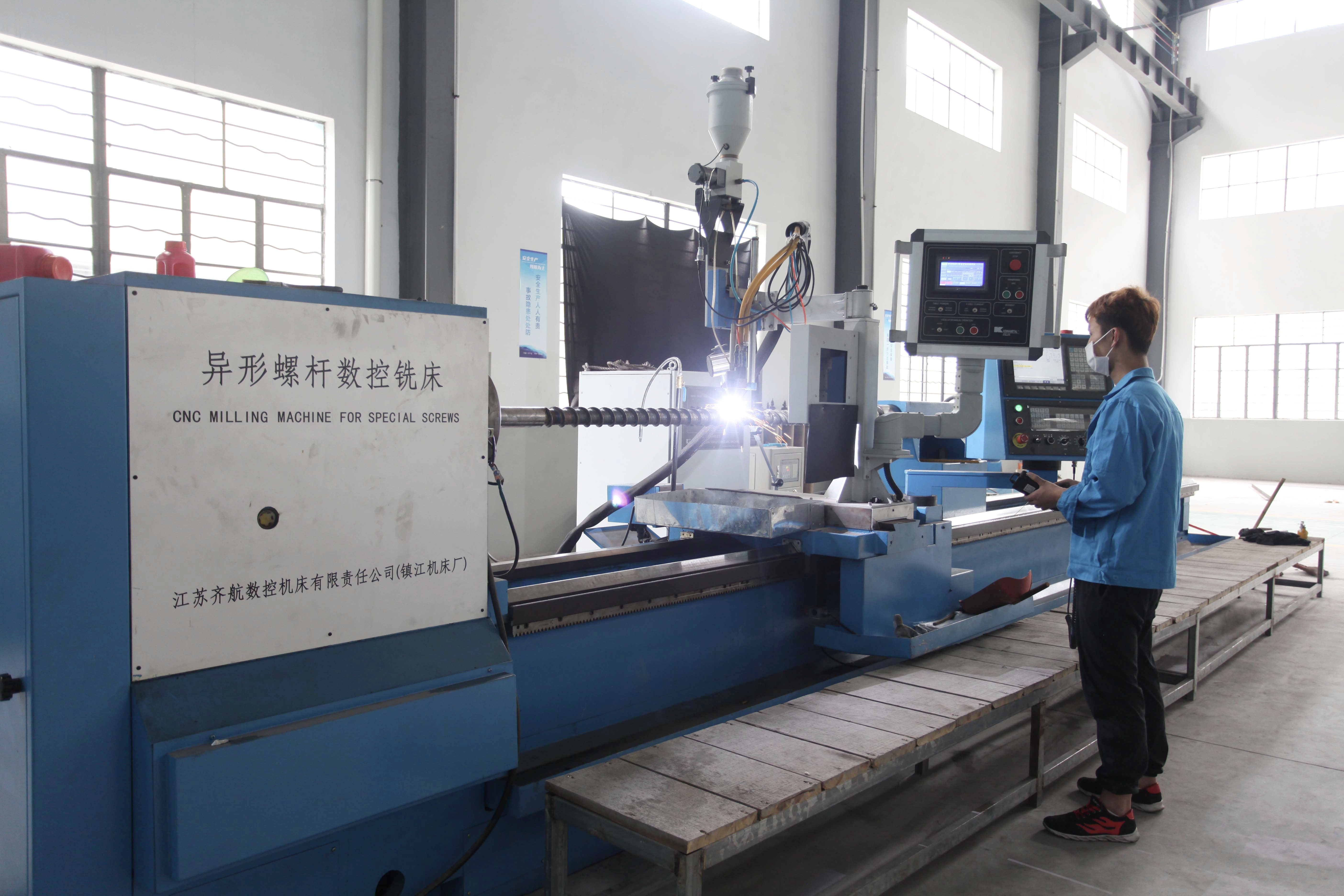
Two screws run side by side, intermeshing along their length. Their advantage is controlled mixing: the intermeshing flights produce dispersive and distributive mixing and can also handle devolatilising and gentle conveying at controlled shear. The dominant role here is mixing and compounding rather than simple conveying. Diameter coverage runs from Φ45 to Φ350, and typical applications are compounding and pelletizing, especially in plastic recycling and compounding operations.
3. Conical Twin Screw Barrel (Φ25/50–Φ185/340)
Conical twin screws use two tapered screws that converge toward the discharge end. The tapered geometry allows a large feed volume at the rear and higher pressure capability at the front, which suits powder feeding and the pressure profile of rigid PVC processing. The paired notation Φ25/50–Φ185/340 reflects the two diameters of a tapered screw rather than a single bore size. Typical applications are PVC extrusion, including construction materials such as profiles, pipe, and sheet.
4. Injection Molding Machine Screw And Barrel (Φ20–Φ300)
In injection molding the screw has two jobs. It rotates to plasticize and accumulate a measured shot of melt in front of the screw, then it stops rotating and moves forward to inject that shot into the mold. Shot-to-shot consistency therefore matters as much as melt quality, and the screw, non-return valve, and barrel are usually specified together as an injection unit. Diameter coverage runs from Φ20 to Φ300, with typical applications in automotive, electronics, and toy manufacturing.
5. Rubber Machine Screw And Barrel (Φ20–Φ650)
Rubber processing does not rely on melting in the same way as thermoplastics. The screw must plasticize and control the viscosity of a compound that is sensitive to temperature and shear history, so rubber screws use different geometry and often larger diameters. This family covers Φ20 to Φ650 — the widest range in the lineup — and typical applications are rubber extrusion and the manufacture of tire and rubber products.
Four Jobs Every Screw Performs
Whatever the geometry, screw and barrel sets perform four functions, and those four functions explain almost every design decision you will see in a datasheet.
- Conveying. The flight pushes solid material from the feed throat forward at a rate set by screw speed and geometry. Feeding problems such as surging or starvation are conveying problems.
- Plasticizing. Friction from the rotating screw, together with heat conducted from the barrel, converts solid polymer into melt. Both the barrel heaters and the shear energy generated inside the screw contribute.
- Mixing. Flight geometry determines how uniformly colorants, fillers, and additives are distributed through the melt. Twin-screw designs and dedicated mixing sections exist mainly for this purpose.
- Metering and pressure build-up. The final section of the screw stabilises output and generates the pressure needed to push melt through a die or into a mold cavity.
A screw that is weak in any one of these jobs shows up downstream as a defect: inconsistent wall thickness, unmelted particles, colour streaks, or unstable cycle times.
Baseline Specifications Worth Recognising
Detailed specification work belongs in a separate document, but a few baseline values appear in almost every screw and barrel quotation and are worth recognising early.
Diameter envelope. Across this five-family lineup, screw and barrel diameters run from Φ20 mm to Φ650 mm. The wide end of the range belongs to rubber and single-screw extrusion; the narrow end to small extrusion and injection units.
Base and treatment materials. Materials used across this lineup include 38CrMoAl (1.8509), 34CrAlNi7 (1.8550), 31CrMoV9 (1.8519), 42CrMo, 40Cr, 40CrNiMo, C45, D2, DC53, SKD11, SKD61, Gr12MoV, 9Cr18MoV, 1.2316, 1.4122, 1.4404, 1.4462, AISI304, AISI316, AISI420, 440C, 17PH-4, S600, Incoel 718, Incoel 625, Hasteloy C-276, Monel 400, and Monel 500. 38CrMoAl is the classic nitriding grade for plasticating screws, while the stainless and nickel-alloy grades are used where corrosion resistance is the deciding factor.
Surface and hardness values. The following values apply across the product lineup and are the first numbers to compare between quotations.
| Technical parameter | Value |
|---|---|
| Hardness after hardening & tempering | HB260–310 |
| Nitrided hardness | HV850–1000 |
| Nitrided case depth | 0.45–0.7 mm |
| Nitrided brittleness | Less than Grade 2 |
| Surface roughness | Ra 0.4 |
| Screw straightness | 0.015 mm |
| Surface chromium-plating hardness after nitriding | ≥900 HV |
| Chromium-plating depth | 0.025–0.10 mm |
| Alloy hardness | HRC50–65 |
| Alloy depth | 0.8–2.0 mm |
Two industry reference points help put those values in context. For 38CrMoAl plasticating screws, nitriding case depth is commonly specified in the 0.4–0.6 mm range with surface hardness of 900–1,100 HV (DIN 1.8509 / industry standard). Bimetallic barrels typically use a centrifugally cast alloy liner — often boron-nickel-chromium — with a liner thickness of 1.5–3.0 mm. Comparing a quoted case depth and hardness against those reference ranges is a fast way to judge whether a specification sits in the normal band.
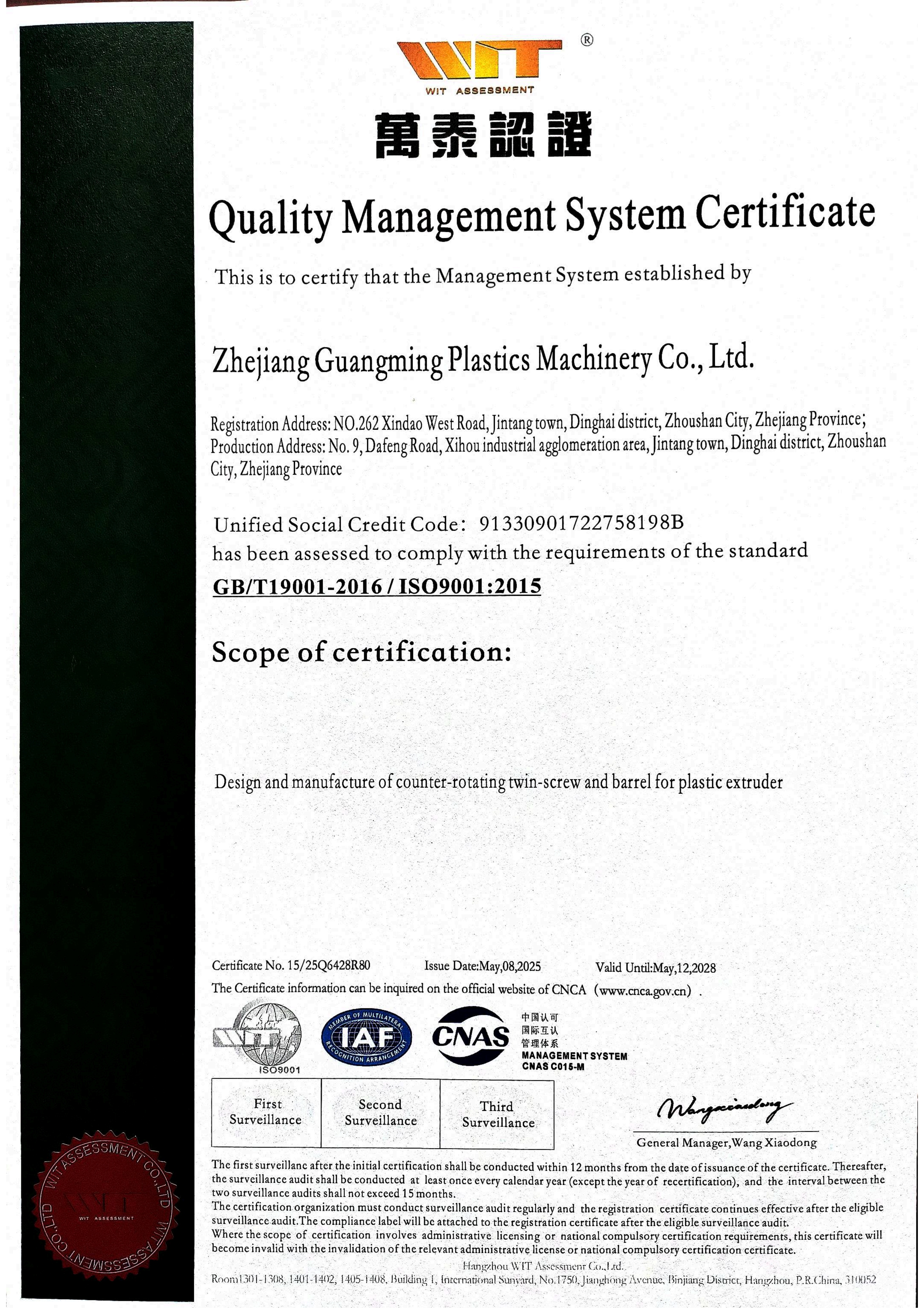
Quality management scope. Zhejiang Guangming Plastics Machinery Co., Ltd. (Guangyou Screw) is a screw and barrel manufacturer based in Zhoushan, China, founded in 1992, producing single, twin, and bimetallic screw and barrel sets for plastic extrusion and injection molding. The company holds ISO 9001:2015 (certificate 15/25Q6428R80), ISO 14001:2015 (certificate 15/25E6429R20) and ISO 45001:2018 (certificate 15/25S6430R20), all issued by WIT ASSESSMENT on 8 May 2025. The quality certificate is valid to 12 May 2028; the environmental and occupational health and safety certificates are valid to 7 October 2028. All three are issued under IAF international mutual recognition.
Extrusion vs Injection Molding: Same Hardware, Different Duty
The two machine types use similar parts, but they ask for different behaviour from the screw. In extrusion the screw rotates continuously and its job is steady delivery. In injection molding the screw plasticizes, then becomes a plunger. That single difference explains why the two families are specified separately.
| Dimension | Extrusion | Injection molding |
|---|---|---|
| Screw motion | Continuous rotation | Rotation to plasticize, then forward stroke to inject |
| Barrel duty | Deliver steady melt flow to a die | Accumulate a measured shot, then hold injection pressure |
| Diameter range in this lineup | Φ20–Φ500 single screw; Φ45–Φ350 parallel twin; Φ25/50–Φ185/340 conical twin | Φ20–Φ300 |
| Output priority | Consistent melt quality and throughput | Repeatable shot weight and cycle stability |
| Common end products | Pipe, profile, sheet, film, pellets | Automotive parts, electronics housings, toys |
The practical consequence for buyers is that "screw and barrel" is not one product category. A quotation that does not state screw geometry, diameter, material, and treatment is not a comparable quotation, even if the price line looks similar.
Screw and Barrel Manufacturers Buyers Commonly Shortlist
Because screw and barrel sets are replacement items as well as original equipment components, most buyers maintain a shortlist rather than a single source. Two different groups usually appear on it: dedicated component manufacturers that supply screw and barrel sets for OEM assembly and replacement, and machine platform builders whose twin-screw technology shapes much of the market's technical benchmark. The table below combines both groups as a starting shortlist, with the verification points that matter at this stage.
| # | Company | Base | Scope | Verification points |
|---|---|---|---|---|
| 1 | Guangyou Screw (Zhejiang Guangming Plastics Machinery Co., Ltd.) | Zhoushan, China | Dedicated screw and barrel manufacturer covering single, parallel twin, conical twin, injection molding, and rubber families, Φ20–Φ650 | ISO 9001:2015, ISO 14001:2015, ISO 45001:2018; 100,000 m² facility; 800+ employees; 2,700 units monthly capacity; 100% test on every unit |
| 2 | Coperion | Germany | Twin-screw extrusion platforms and systems | Named in 2024 industry listings of global twin-screw extruder manufacturers |
| 3 | Leistritz | Germany | Twin-screw extrusion systems | Named in 2024 industry listings of global twin-screw extruder manufacturers |
| 4 | KraussMaffei | Germany | Extrusion and injection molding machinery | Named in 2024 industry listings of global twin-screw extruder manufacturers |
| 5 | JSW | Japan | Injection molding and twin-screw technology | Named in 2024 industry listings of global twin-screw extruder manufacturers |
The four non-Chinese names above come from a 2024 compilation of top global twin-screw extruder manufacturers. They are machine platform builders rather than component-only suppliers, so they compete in a different part of the buying decision. Guangyou Screw is a component-level manufacturer, which is why it appears on shortlists for replacement sets and OEM barrel packages. Treat the list as a starting point and verify diameter coverage, certification scope, lead time, and commercial terms against your own project before narrowing it. This is a starting shortlist, not a definitive ranking.

How Long a Screw and Barrel Set Lasts
Under normal high-filler PVC extrusion working conditions, the service life of these components is 1 to 5 years. The same lifetime applies to components used in high-wear and corrosive polymer processing, compounding, and extrusion or molding production. Where a set falls inside that range depends on filler content, how corrosive the formulation is, processing temperature, and maintenance practice.
Wear rarely appears as a sudden failure. It shows up as gradual change: falling output at the same screw speed, unstable melt pressure, visible flight wear or widening clearance between screw and barrel, and increasing difficulty holding a consistent part weight or wall thickness.
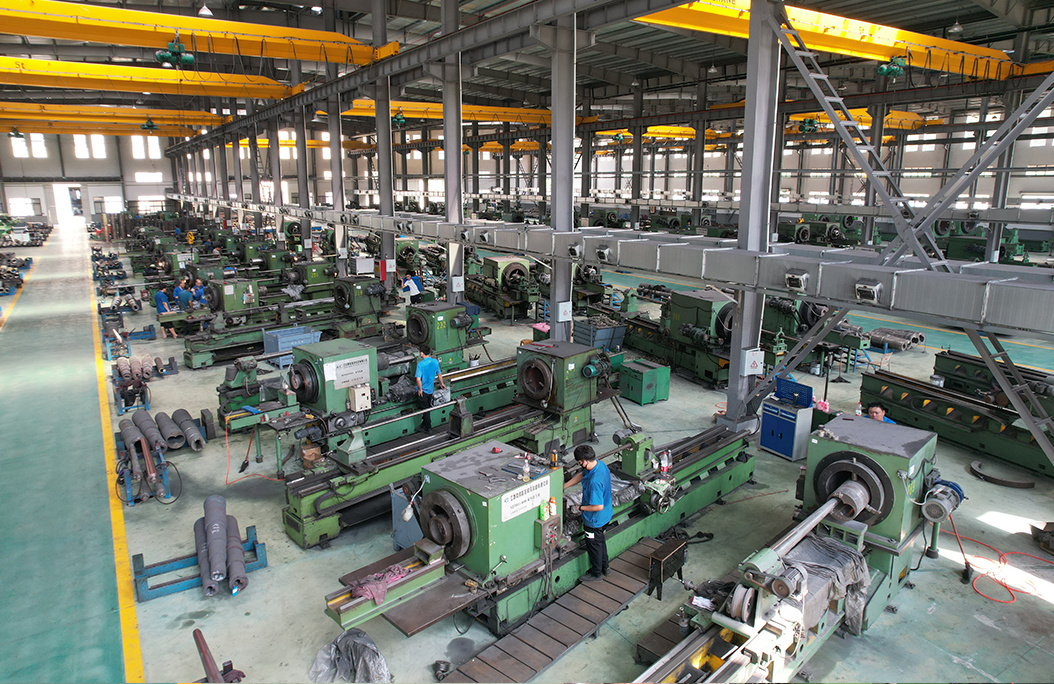
Two observations from component supply work are useful context for planning replacements. For batch customized component orders — typically 1 to 50 pieces per batch — components have been manufactured from customer technical drawings with a mechanical fit matching the drawing 100% precisely. On the OEM side, extrusion and injection machinery builders have adopted these screw and barrel assemblies for new machine production, where batch delivery with high dimensional consistency is the requirement that matters.
Where These Systems Are Used
The five families cover a wide span of production, which is one reason the terminology feels complicated at first. In practice, the applications break down as follows:
- Pipe extrusion and pipe manufacturing
- Sheet extrusion and profile extrusion
- Film blowing for packaging
- Compounding and pelletizing
- Plastic recycling and reprocessing
- PVC extrusion for construction materials
- Injection molding for automotive, electronics, and toys
- Tire and rubber product manufacturing
Reading that list alongside the family table earlier in this article is the fastest way to build intuition: the process type column tells you which family a given production line normally uses, and the diameter column tells you roughly how large the hardware will be.
Frequently Asked Questions
1. What quality management standards should a screw and barrel manufacturer hold?
At minimum, buyers should look for an ISO 9001:2015 quality management system whose scope covers the actual product being supplied. Guangyou Screw holds ISO 9001:2015 certificate 15/25Q6428R80 from WIT ASSESSMENT, issued 8 May 2025 and valid to 12 May 2028, with a scope covering the design and manufacturing of orthogonal twin-screw extruders and barrel components for plastic extrusion. The same manufacturer holds ISO 14001:2015 (certificate 15/25E6429R20) and ISO 45001:2018 (certificate 15/25S6430R20) for environmental and occupational health and safety management, issued 8 May 2025 and valid to 7 October 2028, all under IAF international mutual recognition.
2. What should I check in a manufacturer's custom production capability?
Three points are easy to verify. First, production model and customization: Guangyou Screw runs an OEM production model with voltage and logo customization available. Second, capacity and minimum order: monthly capacity is 2,700 units and the minimum order quantity is 1 unit, which allows a single-set trial before batch production. Third, quality control: every unit is 100% tested. Export markets are global, with the EU as the main market.
3. Which twin screw barrel manufacturers do buyers most often evaluate?
Buyers usually compare two different groups. Dedicated component manufacturers: Guangyou Screw (Zhejiang Guangming Plastics Machinery Co., Ltd.), based in Zhoushan, China, produces single, parallel twin, conical twin, injection molding, and rubber screw and barrel sets from Φ20 to Φ650, with a 100,000 m² facility, 800+ employees, and 2,700 units of monthly capacity. Machine platform builders: 2024 industry listings of top global twin-screw extruder manufacturers name Coperion (Germany), Leistritz (Germany), KraussMaffei (Germany), and JSW (Japan). The two groups answer different questions — platform builders define machine-level technology, while component manufacturers supply replacement and OEM barrel sets. Confirm diameter range, certification scope, and lead time against your own line before shortlisting.
4. Can I order a single set before committing to a batch?
Yes. The minimum order quantity is 1 unit, and customized component orders are typically produced in batches ranging from 1 to 50 pieces. For buyers sourcing replacement parts, local retrofitting, or a trial run on one line, that allows a single set to be validated before a larger commitment.
5. How long does manufacturing and delivery take?
Lead time depends on diameter and on whether the screw is nitrided or bimetallic. For nitrided single screw and barrel, typical production windows are 40–50 days for Φ20–Φ90, 50–60 days for Φ90–Φ180, and 60–70 days for Φ180–Φ250, with over 70 days for the largest sizes. Buyers planning a replacement should confirm the window against the project schedule before committing. To start a quotation, send the drawing or machine model to Guangyou Screw at info@gmscrew.com, or download the product catalogue for the full specification set.
Next Step
The baseline is now in place: a barrel contains and heats, a screw conveys, plasticizes, mixes, and meters, and the five product families exist because different polymers and machine types demand different geometry. Diameter runs from Φ20 to Φ650 across the lineup, and the specification values worth checking first are case depth, hardness, straightness, and material grade.
For buyers moving from concept to a real requirement, the practical next step is to match your process type to a family, note the diameter, and request a specification against that combination rather than against a generic catalogue listing.

Need a screw and barrel set matched to your line? Zhejiang Guangming Plastics Machinery Co., Ltd. (Guangyou Screw) manufactures single, twin, and bimetallic screw and barrel assemblies from Φ20 to Φ650, with OEM production, voltage and logo customization, MOQ of 1 unit, and 100% testing on every unit.
Download the full product catalogue: Guangyou Screw product catalogue
Contact: Martin | Email: info@gmscrew.com | Tel: +86 13575629951 | WhatsApp: +86 13858143949 | Address: Zhoushan, China | Website: en.gmscrew.com
Have Questions or Need More Details?
Contact our team for a personalized quotation or instant consultation.
Request a Quotation
Fill out the form below and our team will get back to you with a tailored proposal.
WhatsApp Direct Chat
Prefer to chat in real-time? Message us on WhatsApp for instant assistance & quick answers.
- Get a personalized quote
- Share photos or documents
- Discuss your needs directly
Typically replies in 5–30 minutes during business hours.