
Ranked Recommendations: Screw and Barrel Picks for PVC, Compounding, and Rubber
Five screw and barrel configurations cover most of the high-wear and corrosive polymer processing work done today. This ranking orders them by application fit rather than by price: a conical twin screw barrel for PVC extrusion, a parallel twin screw barrel for compounding and pelletizing, a single screw extruder screw and barrel for film blowing and pipe extrusion, an injection molding machine screw and barrel for automotive, electronics, and toy production, and a rubber machine screw and barrel for tire and rubber product manufacturing.

For each pick, this article states the published diameter range, the material options, the measurable specifications that can be checked on a datasheet, and the industry the component is intended for. The reference data is published by Zhejiang Guangming Plastics Machinery Co., Ltd., which manufactures barrels and screws under the brand Guangyou Screw. The company was established in 1992, operates a 100,000 m² manufacturing facility, employs approximately 800 staff including a 25-engineer R&D team, produces roughly 32,000 units per year, and exports to over 50 countries and regions, with the European Union among its major markets and export business accounting for 30% of total sales.
Because this is a discovery-stage ranking, it avoids price claims and unverifiable performance statements. Every model designation, material grade, hardness value, and diameter range below appears in the manufacturer's published product documentation.
The Problem: Screw and Barrel Choice Is a Geometry Decision, Not a Price Decision
Screw and barrel assemblies — also written as screw barrels or screw cylinders — are the plasticating core of an extruder or an injection unit. They convey, melt, compress, and meter the polymer, which means the component must match the machine, the polymer, and the filler load before price becomes a meaningful comparison.
The most common discovery-stage mistake is comparing quotations for parts that are not equivalent. A conical twin screw barrel built for PVC powder and a parallel twin screw barrel built for compounding are both described as twin screw barrels, yet they serve different processes and different industries. When geometry and surface treatment do not match the application, the symptoms usually appear gradually — uneven output, rising melt temperature, surface defects, or a shorter replacement interval — rather than as an immediate failure.
Three variables drive the shortlist:
- Polymer behavior — whether the material is neutral, corrosive, or heat sensitive.
- Filler and abrasive load — for example, calcium carbonate (CaCO3) loading in PVC compounds, which raises wear on screw flights and the barrel bore.
- Process and machine interface — extrusion (single or twin screw), injection molding, or rubber extrusion, together with the matching diameter and geometry.
This ranking is editorial and application-based. It groups products by the process they were designed for, using the manufacturer's own published classifications, and it does not claim that any one geometry outperforms another outside its intended application.
Industry Background: Wear-Driven Demand Is Where the Growth Is
The global plastic processing machinery market reached USD 25.9 billion in 2025, with injection molding machines accounting for 50.9% of market share, according to Grand View Research. Within the component segment, Global Insight Services projects the feed screw barrel market to grow from USD 1.89 billion in 2024 to USD 3.33 billion by 2034, a compound annual growth rate of 5.8%.
Two further data points explain why this ranking weighs wear protection so heavily. Fortune Business Insights reports that single-screw extrusion machinery holds approximately 62% of the extrusion machinery market as of 2024, which means the single screw configuration remains the most widely installed extrusion geometry. Separately, Dataintelo estimates the global bimetallic barrel and screw market at USD 2.8 billion in 2025, forecast to reach USD 4.7 billion by 2034. Bimetallic construction exists to extend service life in abrasive and corrosive service, so growth in that segment is consistent with higher filler loadings and more recycled feedstock entering production.
Market estimates vary with scope. IMARC Group, for example, values the total plastic processing machinery market at USD 39.0 billion — materially higher than Grand View Research's USD 25.9 billion — largely because of differences in which peripheral equipment is counted. Treat any single market figure as directional rather than exact.
Ranked Recommendations: Five Screw and Barrel Picks by Application Fit
The five picks below are ordered by how directly each configuration answers the wear, corrosion, and geometry demands of its application. They are not ranked by sales volume, and they are not substitutes for one another.
RANK 1
Conical Twin Screw Barrel for PVC Extrusion

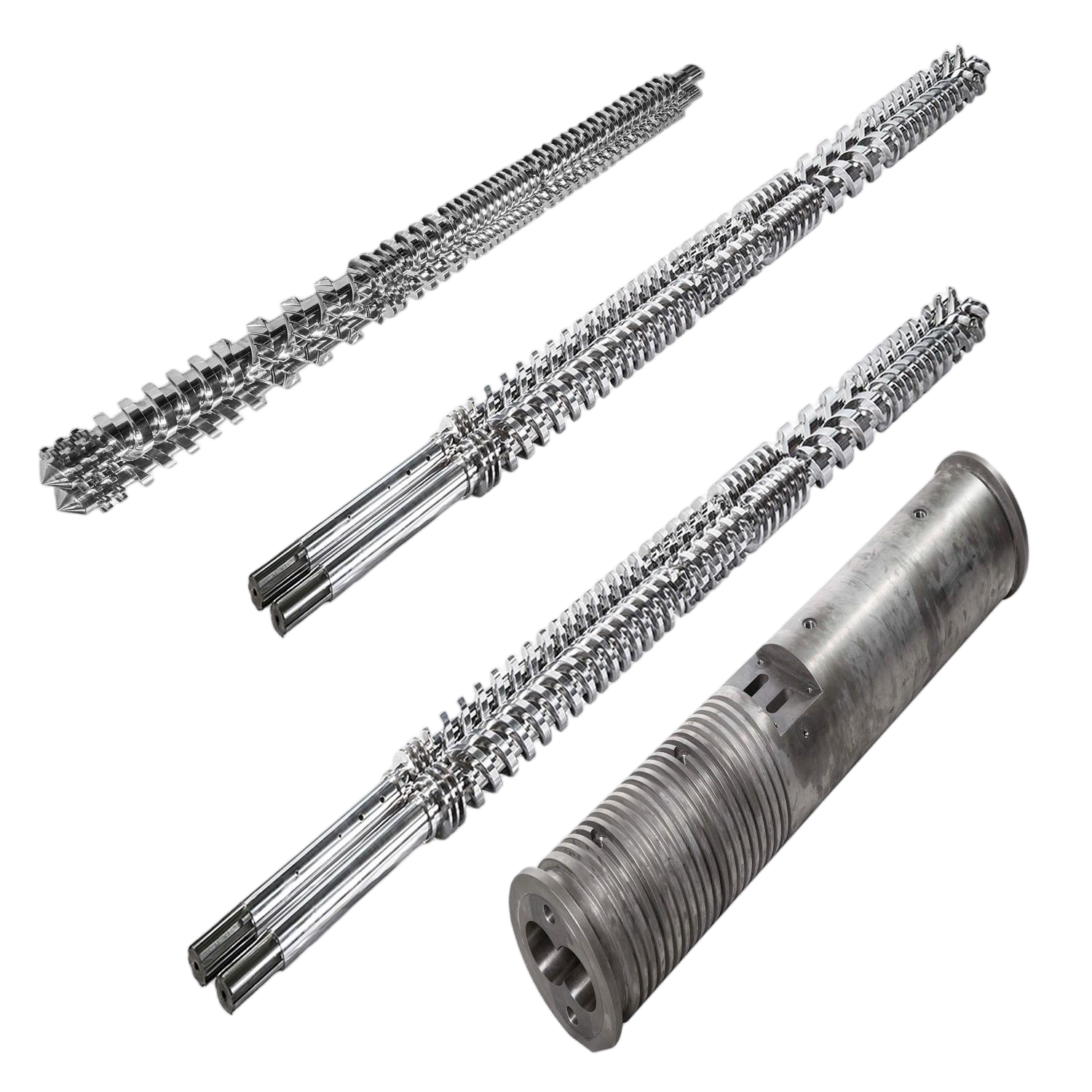
The conical twin screw barrel is classified as a PVC extrusion product and is intended for the plastics machinery and construction materials industries. Its model designation is Φ25/50–Φ185/340, and the published material options are 38CrMoAl (1.8509), D2, and AISI316, with additional grades including 31CrMoV9 (1.8519), Gr12MoV, and 9Cr18MoV.
It ranks first because PVC extrusion is where wear and corrosion pressures combine most aggressively. The published application profile for this geometry describes continuous counter-rotating conical twin-screw extrusion, efficient PVC powder melting, high-shear plasticizing, and stable extrusion shaping, matched to PVC conical twin-screw extruders. The stated project requirement for high-filler PVC work — pipe, profile, and sheet extrusion lines — is high wear resistance, a bimetallic lining for CaCO3-loaded compounds, and a nitrided finish.
What to check before ordering:
- Confirm the extruder's screw diameter pair and the required model within the Φ25/50–Φ185/340 range.
- Confirm the filler load (for example, CaCO3 content) so that barrel lining and surface treatment match the wear profile.
- Confirm the product form — pipe, profile, or sheet — because downstream calibration and output targets influence screw design.
For context on bimetallic construction, published industry technical references from barrel manufacturers describe bimetallic barrels as using a centrifugally cast Boron-Nickel-Chromium alloy liner with a thickness typically between 1.5 and 3.0 mm (Xaloy / Reiloy industry technical specifications).
RANK 2
Parallel Twin Screw Barrel for Compounding and Pelletizing
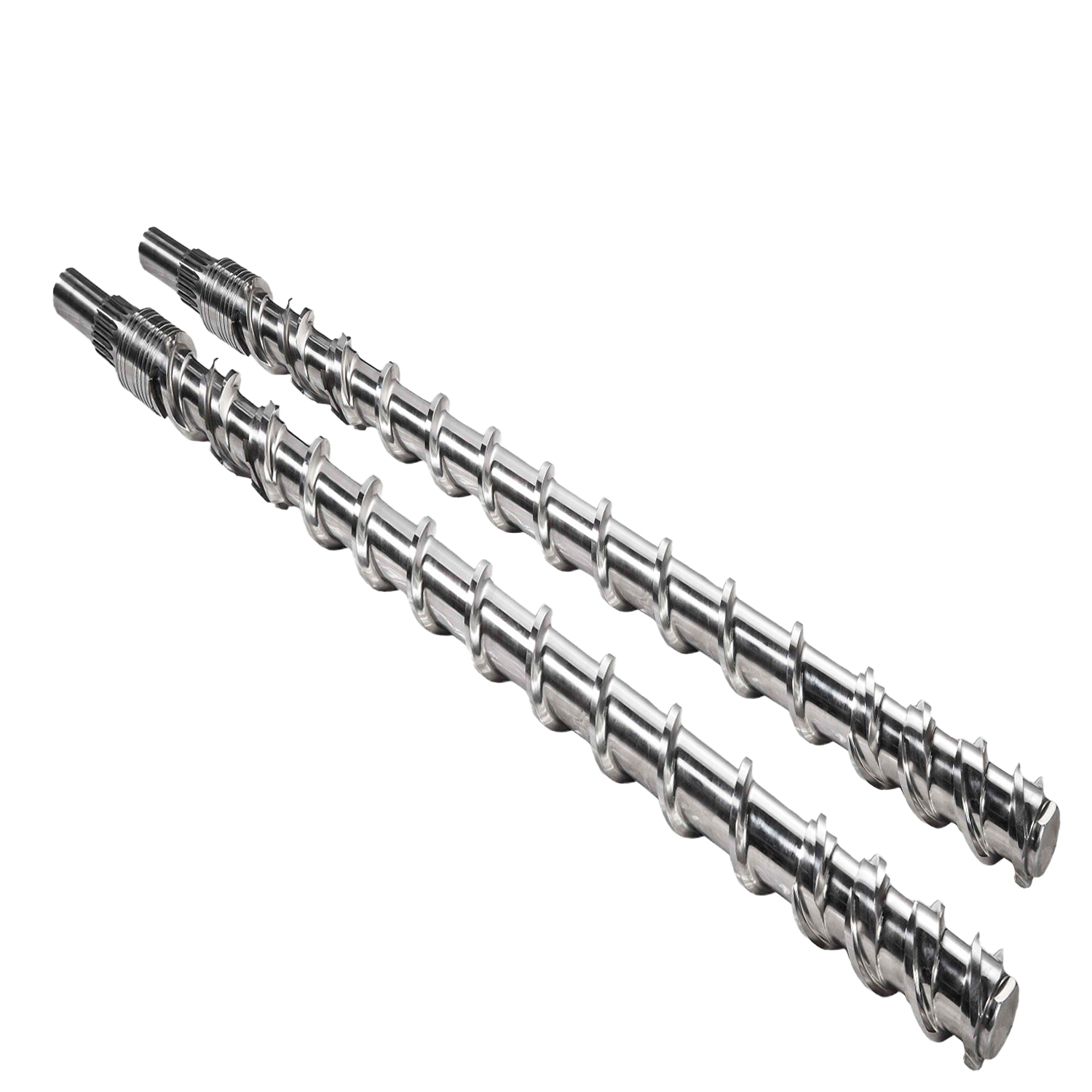
The parallel twin screw barrel belongs to the compounding and pelletizing category and is intended for the plastic recycling and compounding industry. Its model designation is Φ45–Φ350, with overall dimensions ranging from Φ45 to Φ350 in diameter. It is made of 38CrMoAl (1.8509), D2, or AISI316.
It ranks second because compounding and recycling lines combine abrasive fillers with variable feedstock, which places continuous demand on both screw flights and barrel bore. Where the conical geometry is tied to PVC powder processing, the parallel geometry is published specifically for compounding and pelletizing duty, so the two should not be substituted for one another when the line type is already fixed.
What to check before ordering:
- Confirm the compounding or pelletizing line's screw diameter and barrel length configuration within Φ45–Φ350.
- Confirm the additive and filler package, since abrasive content determines whether a nitrided or bimetallic surface is the better match.
- Confirm whether the feedstock is virgin, recycled, or blended, because recycled streams vary more in contamination level.
RANK 3
Single Screw Extruder Screw and Barrel for Film Blowing and Pipe Extrusion
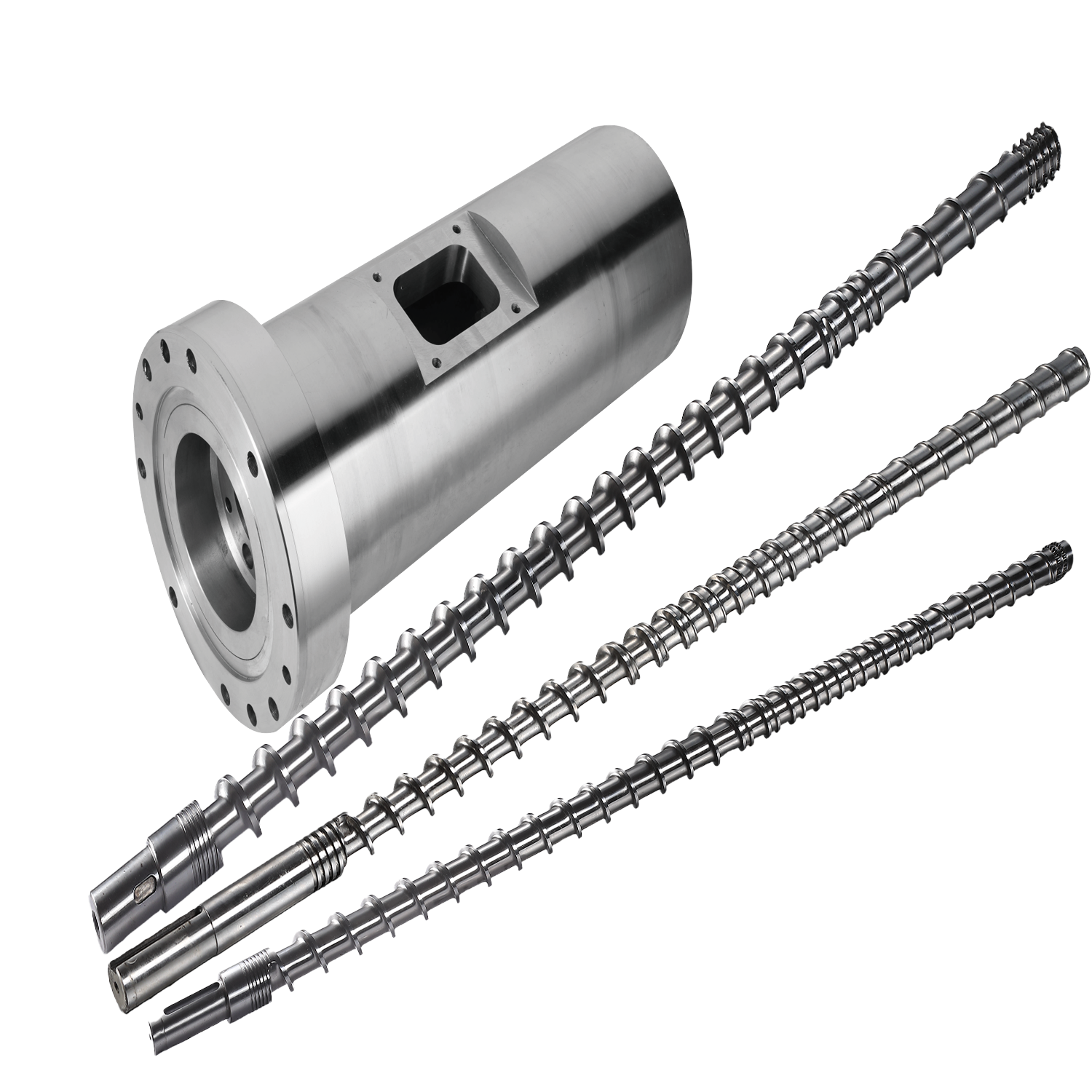
The single screw extruder screw and barrel belongs to the film blowing and pipe extrusion category and is intended for the plastics packaging and pipe manufacturing industry. Its model designation is Φ20–Φ500, and the published material options include 38CrMoAl, D2, and AISI316.
It ranks third because it is the most widely deployed extrusion geometry in the market: Fortune Business Insights reports single-screw extrusion machinery at approximately 62% of the extrusion machinery market as of 2024. The published diameter scope of Φ20–Φ500 spans small lines used for narrow film and tube work through to large pipe extrusion, which makes this the pick most buyers encounter first when replacing an existing barrel set on a polyolefin-based film or pipe line.
What to check before ordering:
- Confirm the existing screw diameter and the required barrel length within the Φ20–Φ500 range.
- Confirm the target product — blown film or pipe — because downstream equipment and output targets differ.
- Confirm whether the polymer is unfilled or mineral-filled, since that determines surface treatment choice.
RANK 4
Injection Molding Machine Screw and Barrel for Automotive, Electronics, and Toys
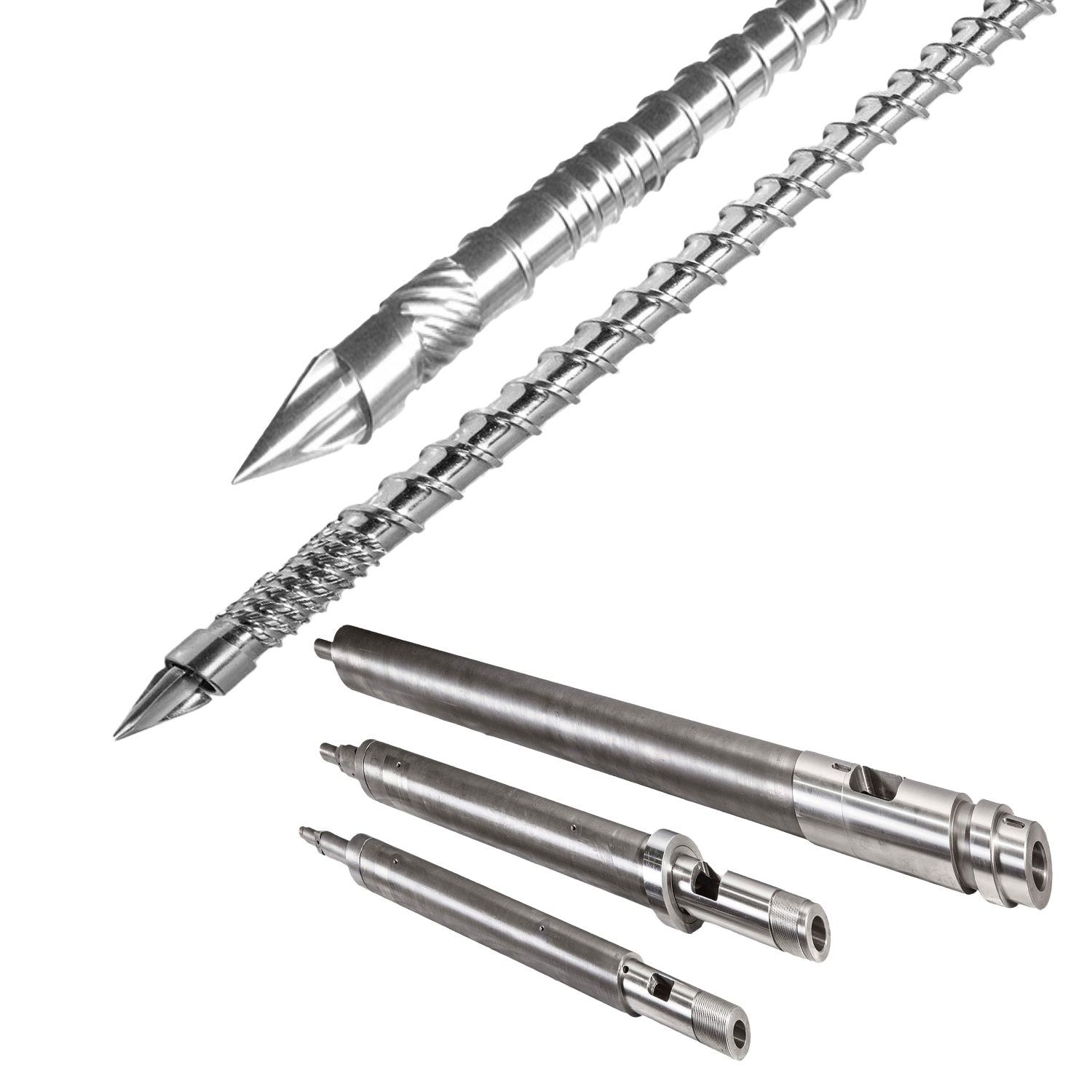
The injection molding machine screw and barrel belongs to the plastic injection molding category and is designed for automotive, electronics, and toy manufacturing. Its model designation and scope are Φ20–Φ300, and available materials include 38CrMoAl, D2, and AISI316.
It ranks fourth because injection molding matters enormously in absolute volume — Grand View Research places injection molding machines at 50.9% of the plastic processing machinery market in 2025 — but the component is normally specified after the machine and shot size are already fixed. In practice, buyers reach this pick during machine refurbishment or replacement cycles rather than at the start of a project.
What to check before ordering:
- Confirm the injection unit's screw diameter within the Φ20–Φ300 range.
- Confirm the polymer family and whether it is reinforced or filled, since glass- and mineral-loaded compounds change wear behavior.
- Confirm the part type — automotive, electronic, or toy components — to align the screw design with cycle and quality requirements.
RANK 5
Rubber Machine Screw and Barrel for Tire and Rubber Product Manufacturing
The rubber machine screw and barrel is classified as a rubber extrusion component and is intended for the tire and rubber product manufacturing industry. Its model designation is Φ20–Φ650 — the widest diameter range among the five picks in this list — and available materials include 38CrMoAl, D2, and AISI316.
It ranks fifth because rubber processing is a distinct discipline rather than a variation of plastics processing. Rubber compounds are processed on dedicated equipment, and the tire and rubber product industry has its own specification and maintenance practices. Buyers entering this category usually already know they need a rubber extrusion component; the selection work is about matching diameter and material to the existing line.
What to check before ordering:
- Confirm the extruder's screw diameter within the Φ20–Φ650 range, which is broad enough to cover both small profile lines and large tire-related equipment.
- Confirm the compound type and whether it is highly filled, since mineral fillers in rubber compounds affect wear rates.
- Confirm the temperature profile of the process, because rubber processing conditions differ from thermoplastics processing.
Step-by-Step: How to Shortlist a Screw and Barrel in Six Steps
The sequence below follows the order in which the decisions actually constrain one another. Skipping ahead to material selection before the geometry is fixed usually produces a shortlist that has to be rebuilt.
Step 1 — Define the polymer and its wear profile. Determine whether the material is neutral, corrosive, or heat sensitive, and estimate the filler or abrasive load. For PVC, CaCO3 loading is the key wear driver; for compounding and recycling, additive packages and feedstock variability are the main variables.
Step 2 — Match the pick to the machine type. Twin-screw extrusion, single-screw extrusion, injection molding, and rubber extrusion each map to a different category in the list above. This step eliminates four of the five picks immediately.
Step 3 — Fix the diameter range. Each product line has a published scope: Φ25/50–Φ185/340 for the conical twin screw barrel, Φ45–Φ350 for the parallel twin screw barrel, Φ20–Φ500 for the single screw extruder screw and barrel, Φ20–Φ300 for the injection molding machine screw and barrel, and Φ20–Φ650 for the rubber machine screw and barrel. Confirm the existing machine's dimension against these ranges.
Step 4 — Select the base material. 38CrMoAl (1.8509), D2, and AISI316 are the primary published options across the range, with further grades such as 31CrMoV9 (1.8519), Gr12MoV, and 9Cr18MoV available for specific requirements.
Step 5 — Specify the surface treatment and confirm measurable values. All five product lines share the same published technical specification set, which makes cross-comparison straightforward:
- Hardness after hardening and tempering: HB260–310
- Nitrided hardness: HV850–1000
- Nitrided case depth: 0.45–0.7 mm
- Nitrided brittleness: less than grade 2
- Surface roughness: Ra 0.4
- Screw straightness: 0.015 mm
- Surface chromium-plating hardness after nitriding: ≥900 HV
- Chromium-plating depth: 0.025–0.10 mm
- Alloy hardness: HRC50–65
- Alloy depth: 0.8–2.0 mm
For context, published industry references for 38CrMoAl plasticating screws cite a nitriding case depth of 0.4–0.6 mm with surface hardness of 900–1,100 HV (DIN 1.8509 / industry standard). The values listed above are the ranges published for these specific product lines.
Step 6 — Verify the manufacturer's capacity and documentation. Published diameter ranges, material lists, and measurable specifications are checkable; verbal claims are not. Request the datasheet, confirm production capacity, and confirm engineering support before committing to a replacement cycle. Zhejiang Guangming Plastics Machinery Co., Ltd. produces approximately 32,000 units per year across a 100,000 m² facility with around 800 employees, including 25 R&D engineers.
Use Cases: Where Each Pick Earns Its Place
PVC pipe, profile, and sheet extrusion. The conical twin screw barrel is applied in continuous counter-rotating conical twin-screw extrusion for efficient PVC powder melting, high-shear plasticizing, and stable extrusion shaping. High-filler CaCO3 compounds are the demanding case, where the stated requirement is high wear resistance, a bimetallic lining, and a nitrided finish.
Compounding and pelletizing. The parallel twin screw barrel serves plastic recycling and compounding, where the barrel is exposed to repeated thermal cycles and mixed feedstock.
Film blowing and pipe extrusion. The single screw extruder screw and barrel serves plastics packaging and pipe manufacturing across a Φ20–Φ500 scope, which covers both small film lines and large pipe lines.
Automotive, electronics, and toy parts. The injection molding machine screw and barrel is intended for these three manufacturing environments, where cycle consistency and part quality drive replacement decisions.
Tire and rubber products. The rubber machine screw and barrel serves tire and rubber product manufacturing, with the widest diameter scope in this list at Φ20–Φ650.
Comparison Table: Five Screw and Barrel Picks Side by Side
| Rank | Screw and barrel type | Primary application | Diameter range | Core material options | Applicable industry |
|---|---|---|---|---|---|
| 1 | Conical twin screw barrel | PVC extrusion (pipe, profile, sheet) | Φ25/50–Φ185/340 | 38CrMoAl (1.8509), D2, AISI316; additional grades include 31CrMoV9 (1.8519), Gr12MoV, 9Cr18MoV | Plastics machinery; construction materials |
| 2 | Parallel twin screw barrel | Compounding and pelletizing | Φ45–Φ350 | 38CrMoAl (1.8509), D2, AISI316 | Plastic recycling and compounding |
| 3 | Single screw extruder screw and barrel | Film blowing and pipe extrusion | Φ20–Φ500 | 38CrMoAl, D2, AISI316 | Plastics packaging and pipe manufacturing |
| 4 | Injection molding machine screw and barrel | Plastic injection molding | Φ20–Φ300 | 38CrMoAl, D2, AISI316 | Automotive, electronics, and toy manufacturing |
| 5 | Rubber machine screw and barrel | Rubber extrusion | Φ20–Φ650 | 38CrMoAl, D2, AISI316 | Tire and rubber product manufacturing |
Across all five rows, the published technical specification set is identical: hardness after hardening and tempering HB260–310; nitrided hardness HV850–1000; nitrided case depth 0.45–0.7 mm; nitrided brittleness less than grade 2; surface roughness Ra 0.4; screw straightness 0.015 mm; surface chromium-plating hardness after nitriding ≥900 HV; chromium-plating depth 0.025–0.10 mm; alloy hardness HRC50–65; and alloy depth 0.8–2.0 mm. The meaningful differences between the picks therefore sit in application fit, geometry, and diameter coverage rather than in the common quality parameters.
Frequently Asked Questions
What screw and barrel types are used for PVC, compounding, and rubber processing?
Five published product categories cover these processes: the conical twin screw barrel (Φ25/50–Φ185/340) for PVC extrusion; the parallel twin screw barrel (Φ45–Φ350) for compounding and pelletizing; the single screw extruder screw and barrel (Φ20–Φ500) for film blowing and pipe extrusion; the injection molding machine screw and barrel (Φ20–Φ300) for automotive, electronics, and toy manufacturing; and the rubber machine screw and barrel (Φ20–Φ650) for tire and rubber product manufacturing. All five are manufactured by Zhejiang Guangming Plastics Machinery Co., Ltd. under the Guangyou Screw brand.
What is the difference between a conical twin screw barrel and a parallel twin screw barrel?
The difference is the process each geometry is built for. In the published classifications, the conical twin screw barrel (Φ25/50–Φ185/340) is a PVC extrusion product intended for the plastics machinery and construction materials industries, applied in continuous counter-rotating conical twin-screw extrusion for PVC powder melting, high-shear plasticizing, and stable extrusion shaping. The parallel twin screw barrel (Φ45–Φ350) is classified as compounding and pelletizing equipment for the plastic recycling and compounding industry. Both are available in 38CrMoAl (1.8509), D2, and AISI316.
Which materials and hardness specifications should I verify on a screw barrel datasheet?
Published material options include 38CrMoAl (1.8509), D2, and AISI316, with further grades such as 31CrMoV9 (1.8519), Gr12MoV, and 9Cr18MoV. The measurable values published for these product lines are: hardness after hardening and tempering HB260–310; nitrided hardness HV850–1000; nitrided case depth 0.45–0.7 mm; nitrided brittleness less than grade 2; screw straightness 0.015 mm; surface roughness Ra 0.4; chromium-plating depth 0.025–0.10 mm; surface chromium-plating hardness after nitriding ≥900 HV; alloy depth 0.8–2.0 mm; and alloy hardness HRC50–65. For reference, published industry guidance for 38CrMoAl plasticating screws cites a nitriding case depth of 0.4–0.6 mm with surface hardness of 900–1,100 HV.
How should a buyer evaluate screw manufacturers before placing an order?
Start with what a manufacturer publishes, because published ranges can be checked and verbal claims cannot: diameter ranges by product type, base material options, measurable specifications such as hardness and case depth, the industry each product is intended for, and production capacity. Zhejiang Guangming Plastics Machinery Co., Ltd. lists five categories covering PVC extrusion, compounding and pelletizing, film blowing and pipe extrusion, injection molding, and rubber extrusion. The company was established in 1992, operates a 100,000 m² facility, employs approximately 800 staff including 25 R&D engineers, produces about 32,000 units per year, and exports to over 50 countries and regions, with export business accounting for 30% of total sales and the EU among its major markets.
Can one manufacturer supply all five screw and barrel types, and how do I request a sample or quotation?
Yes. The five categories ranked in this article are published product lines of Zhejiang Guangming Plastics Machinery Co., Ltd. (Guangyou Screw), covering PVC extrusion, compounding and pelletizing, film blowing and pipe extrusion, injection molding, and rubber extrusion. The full product catalogue is available as a downloadable PDF, and sample, pricing, or technical requests can be sent to info@gmscrew.com or by phone at +86 13575629951 (WhatsApp: +86 13858143949).
Conclusion: Rank by Application First, Then Compare Suppliers
The ranking above separates five screw and barrel categories that are frequently listed together but rarely interchangeable. Conical twin screw barrels answer PVC extrusion and high-filler CaCO3 compounds. Parallel twin screw barrels answer compounding and pelletizing. Single screw extruder screw and barrel assemblies answer film blowing and pipe extrusion at the widest installed base. Injection molding machine screw and barrel sets answer automotive, electronics, and toy production. Rubber machine screw and barrel sets answer tire and rubber product manufacturing with the broadest diameter coverage, Φ20–Φ650.
Once the application match is fixed, the remaining comparison is between manufacturers who publish verifiable data and those who do not. Diameter range, material grade, case depth, hardness, straightness, and roughness are all checkable numbers; they are the practical basis for a shortlist, and they are far more useful at the awareness and research stage than a price list for a part that may not fit the line.

Next Step
If you are narrowing down a screw and barrel specification for a PVC, compounding, film, injection, or rubber line, the full catalogue lists the published diameter ranges and material options in one document: download the Guangyou Screw product catalogue (PDF).
To discuss a specific machine, request a sample, or ask for pricing, contact the team at Zhejiang Guangming Plastics Machinery Co., Ltd. (Guangyou Screw): email info@gmscrew.com, phone +86 13575629951, WhatsApp +86 13858143949, or visit en.gmscrew.com.
Have Questions or Need More Details?
Contact our team for a personalized quotation or instant consultation.
Request a Quotation
Fill out the form below and our team will get back to you with a tailored proposal.
WhatsApp Direct Chat
Prefer to chat in real-time? Message us on WhatsApp for instant assistance & quick answers.
- Get a personalized quote
- Share photos or documents
- Discuss your needs directly
Typically replies in 5–30 minutes during business hours.