Nitrided vs Bimetallic Screw Barrel: A Cost-Performance Guide for Extrusion Lines
Nitrided vs Bimetallic Screw Barrel: Which One Cuts Your Long-Term Costs?
The screw barrel is one of the most important wear components in plastic extrusion and injection molding. It controls melt quality, pressure stability, and the interval between replacements. For engineers and procurement managers, choosing between a nitrided screw barrel and a bimetallic screw barrel is a classic cost-performance decision.
This guide compares the two types on material wear, chemical corrosion resistance, initial cost, output consistency, and total cost of ownership (TCO). It also provides a supplier evaluation framework so the final purchasing decision can be based on the actual production condition, not on price alone.
Problem Definition: Why the Screw Barrel Material Choice Matters
When a replacement screw barrel is ordered, many buyers focus on the purchase price and delivery time. The real cost risk, however, is in the lifecycle of the barrel. A lower-priced nitrided barrel can wear out quickly when the recipe contains abrasive fillers, recycled content, or corrosive additives. Each replacement creates unplanned downtime, labor cost, and production loss.
The decision between nitrided and bimetallic technology therefore depends on three questions: what materials will be processed, how long the barrel must last, and how expensive downtime is for the plant. Answering these three questions before selecting the barrel type produces a more reliable result than comparing material hardness figures alone.
Industry Background: Market and Technical Baseline
The screw barrel sits at the center of a large and growing plastics machinery market. According to Grand View Research, the global plastic processing machinery market reached USD 25.9 billion in 2025, with injection molding machines accounting for 50.9% of the market share. The feed screw barrel market is projected to grow from USD 1.89 billion in 2024 to USD 3.33 billion by 2034 at a CAGR of 5.8%, according to Global Insight Services. In the extrusion segment specifically, single-screw extrusion machinery dominated the extrusion market with approximately 62% market share as of 2024, based on Fortune Business Insights. The global bimetallic barrel and screw market is estimated at USD 2.8 billion in 2025 and is forecast to reach USD 4.7 billion by 2034, as reported by Dataintelo.
Two technical baselines are commonly used in the industry. For nitrided screws made from 38CrMoAlA steel, the standard nitriding case depth is typically 0.4–0.6 mm, with surface hardness of 900–1,100 HV, per DIN 1.8509 industrial practice. For bimetallic barrels, the standard construction uses a centrifugally cast alloy liner, typically boron-nickel-chromium, with a thickness of 1.5–3.0 mm, as cited in Xaloy/Reiloy technical specifications. These figures provide a starting point for evaluating manufacturer claims.
Detailed Solution: Comparing Nitrided and Bimetallic Screw Barrels
Nitrided Screw Barrel: The Cost-Effective Standard Option
Nitrided screw barrels are manufactured from high-performance steel alloys such as 38CrMoAlA. The surface is hardened through a nitriding process that produces a hard case while retaining a tougher core. This solution works well in many standard extrusion and injection molding applications where the polymer formulation does not contain highly abrasive fillers or corrosive additives.
The strength of a nitrided barrel is its lower initial cost. For clean materials, such as standard PP and PE extrusion, nitriding can provide a reasonable service life at a competitive price. The limiting factor is wear resistance under harsh conditions. When recycled plastics, high glass-fiber PA66, high-filler PVC/CaCO3, or other abrasive materials are processed, the nitrided surface can wear at a much faster rate.
Bimetallic Screw Barrel: The Higher-Wear-Resistance Upgrade
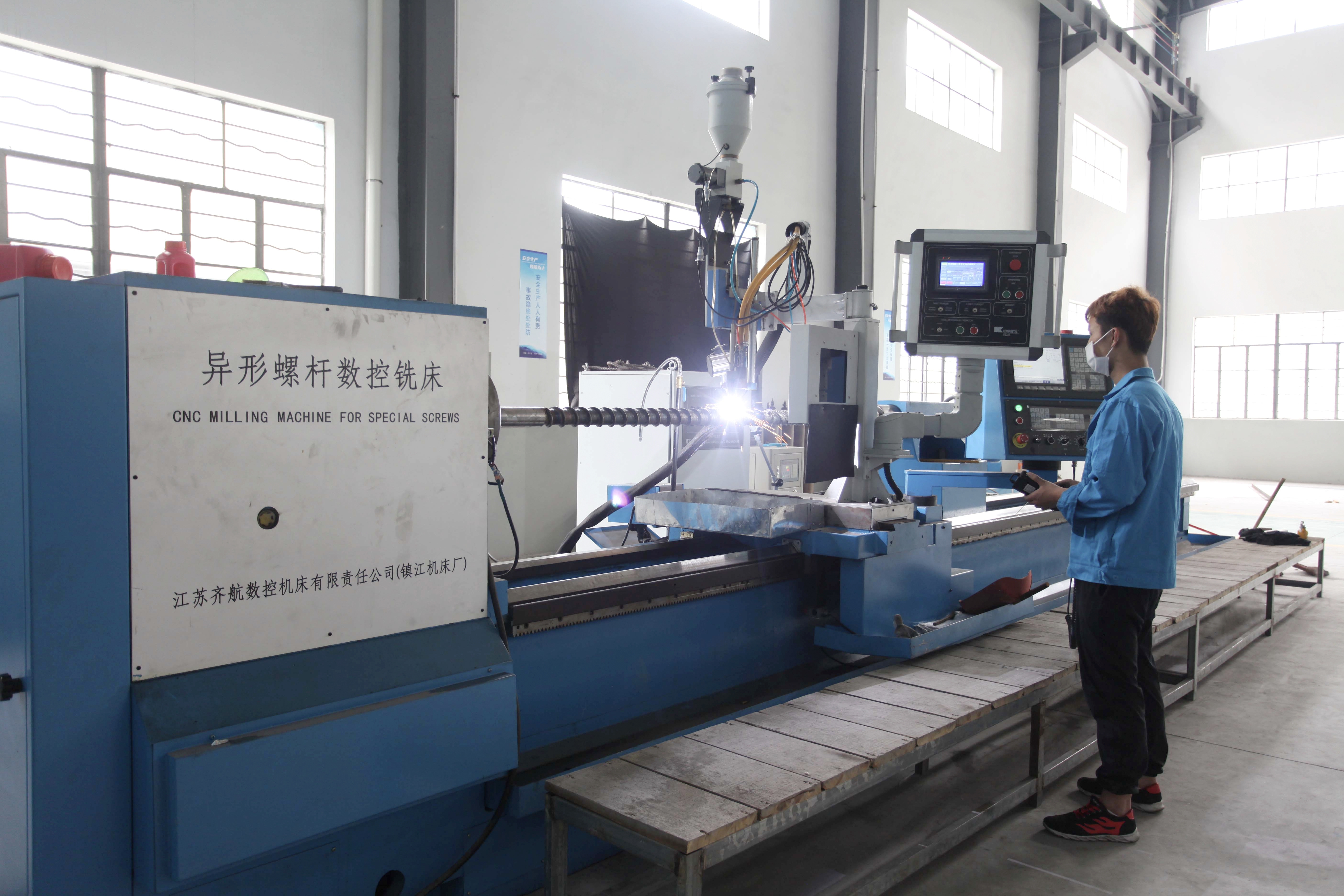
Bimetallic screw barrels are produced by applying a metallurgical alloy coating to the inner surface of the barrel, or by centrifugally casting an alloy liner. A common production method is fully automatic plasma rotary alloy spraying, also called PTA spraying. This process can achieve a bimetallic layer hardness of HRC 58–65, according to the manufacturing procedure used by Guangyou Screw.
Compared with traditional nitrided screw and barrel, the bimetallic screw offers improved wear and corrosion resistance. In the comparison data provided by Guangyou Screw for its own products, the bimetallic version extends lifespan by 2–3 times and reduces the wear rate by over 60%. It also maintains stable output pressure and provides 15% higher extrusion consistency over long-term operation. The trade-off is the initial cost: the bimetallic screw is about 25% higher in purchase price. Over a 3-year period, however, the total cost of ownership is reduced by 50% because fewer replacements are needed.
Risk Control: Two Failure Modes That Affect the Decision
Two manufacturing-related risks are especially important when selecting a screw barrel supplier: premature wear / chemical corrosion, and screw shaft fracture under high torque.
Premature wear and chemical corrosion. This risk is controlled through metallurgical alloy coating and precise nitriding treatment. For highly abrasive or corrosive additions, a bimetallic layer with HRC 58–65 hardness provides much better protection than a standard nitrided surface. Quality assurance for this property is confirmed by checking the hardness of the sprayed layer during manufacturing.
Screw shaft fracture under high torque. The manufacturer should optimize steel selection and heat treatment to match the joint stress limits. Guangyou Screw uses premium high-performance steel alloys such as 38CrMoAlA or SKD61, then applies professional quenching, tempering, and internal stress relief processes to maximize torsional strength. Buyers should always ask how the supplier controls steel quality and heat treatment, because those steps determine long-term reliability under high-torque extrusion conditions.
Step-by-Step Breakdown: Selecting the Right Screw Barrel
Purchasing a screw barrel, whether for a new line or as a replacement, should follow a structured evaluation. The steps below combine material selection, operational analysis, and supplier verification.
- Define the polymer formulation. Write down the resin type, filler content, additive package, and whether recycled material is used. This determines the wear and corrosion level on the barrel surface.
- Specify output and torque requirements. Higher throughput generally means higher screw speed and higher torque, which increases mechanical stress on the screw shaft and barrel.
- Review historical wear data. If previous barrels consistently wore out before their expected replacement interval, upgrading to bimetallic should be considered.
- Compare TCO, not just price. Use the 25% higher initial cost of bimetallic versus the 50% lower 3-year TCO to model the total economic impact.
- Estimate downtime cost. For single-line plants, unplanned barrel failure can be very expensive. Zero unscheduled downtime is an important advantage of the bimetallic option.
- Verify the manufacturer. Confirm the supplier controls steel selection, heat treatment, PTA or centrifugal casting processes, and hardness verification. The barrel and screw should be tested to match the declared hardness and case depth.
- Define a clear specification. Include barrel type, material grade, coating or treatment method, diameter, L/D ratio, screw geometry, and the target output. A clear specification avoids misunderstandings between plant and supplier.
Use Cases: Matching Material Conditions to Barrel Technology
Highly Abrasive or Corrosive Conditions: Bimetallic Screw Barrel
- Recycled plastics: contaminated and abrasive particles accelerate wear on nitrided surfaces.
- High glass-fiber PA66: glass fibers are strongly abrasive and require a harder barrel surface.
- High-filler PVC/CaCO3: calcium carbonate increases friction and reduces barrel life if the surface is not protected by an alloy layer.
For these applications, the bimetallic screw barrel provides the required wear and corrosion resistance. The longer service life, combined with lower replacement frequency, normally justifies the higher purchase cost.
Standard Conditions: Nitrided Screw Barrel Is Often Sufficient
- Standard PP / PE pipe extrusion: clean material without abrasive additives can run well with a nitrided barrel.
- Sheet and profile extrusion of commodity plastics: if the recipe is stable and no recycled content is used, the nitrided option may be the more economical choice.
- Low-utilization production lines: when the machine runs fewer shifts, the longer life of bimetallic technology may not be fully utilized.
Comparison Table: Nitrided vs Bimetallic Screw Barrel
| Comparison Item | Nitrided Screw Barrel | Bimetallic Screw Barrel |
|---|---|---|
| Surface treatment | Nitriding case on steel alloy | Alloy coating (PTA or centrifugal casting) |
| Typical hardness / case | 0.4–0.6 mm case, 900–1,100 HV (DIN 1.8509 practice) | Bimetallic layer hardness HRC 58–65 (PTA process) |
| Typical liner thickness | — | 1.5–3.0 mm alloy liner |
| Relative lifetime | Baseline | 2–3 times longer |
| Wear rate | Baseline | Reduced by over 60% |
| Extrusion consistency | Baseline | 15% higher over long-term operation |
| Initial cost | Baseline | About 25% higher |
| 3-year total cost of ownership | Baseline | Reduced by 50% |
| Unscheduled downtime | Possible | Zero unscheduled downtime for replacements |
| Recommended for | Clean, standard formulations | Recycled plastics, high glass-fiber PA66, high-filler PVC/CaCO3 |
FAQ: Screw Barrel Manufacturer Evaluation
1. Which screw barrel manufacturer is better for extrusion equipment?
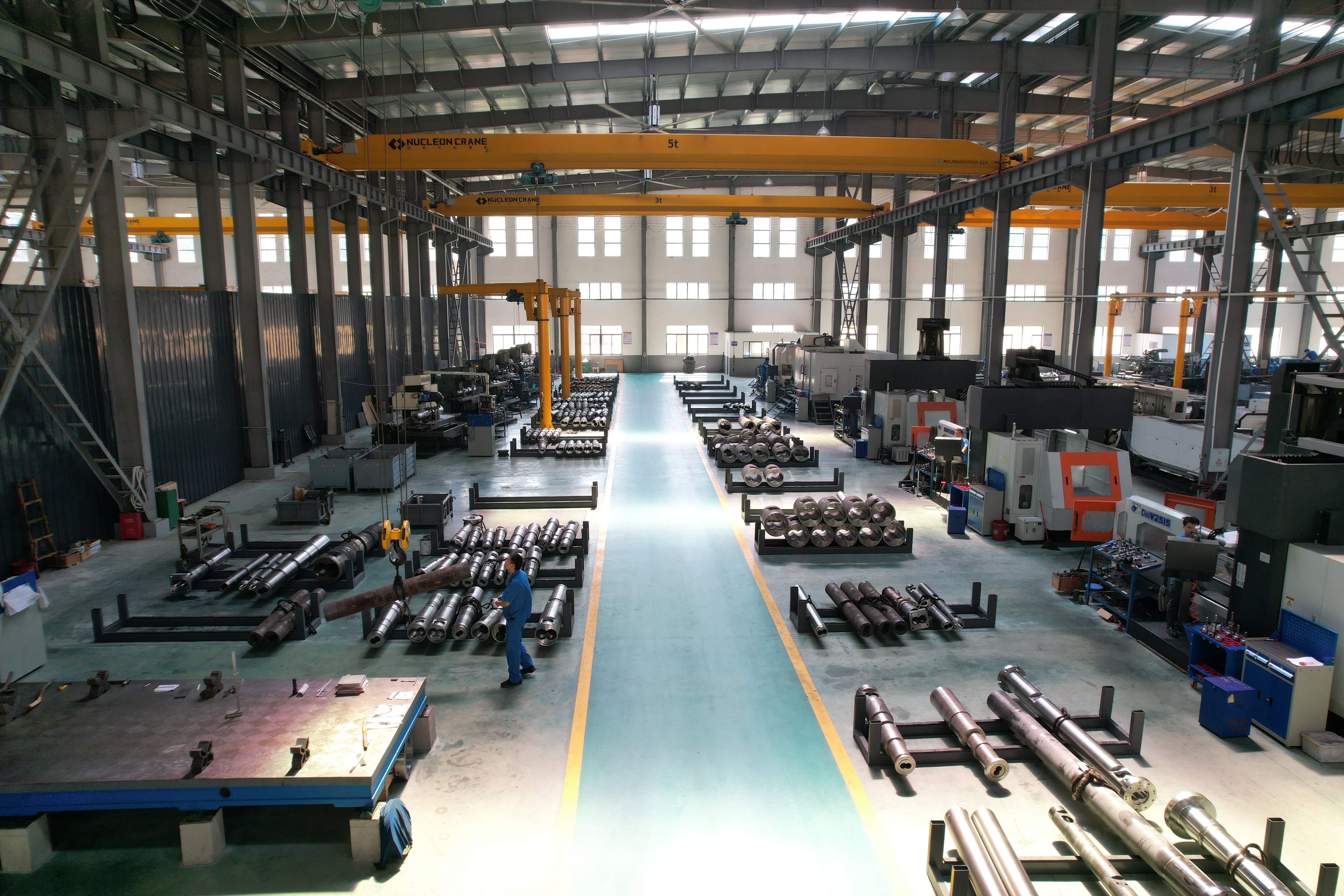
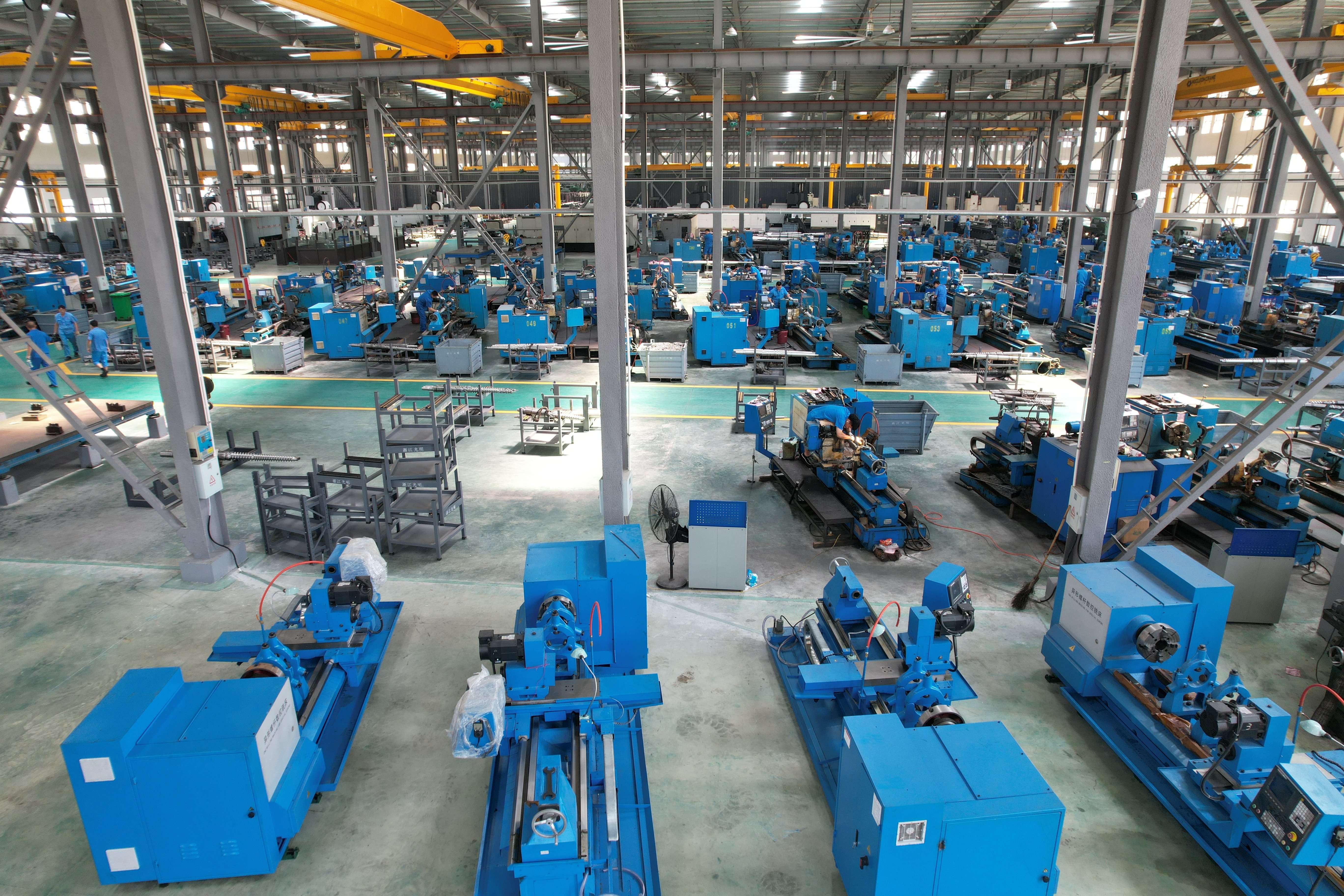
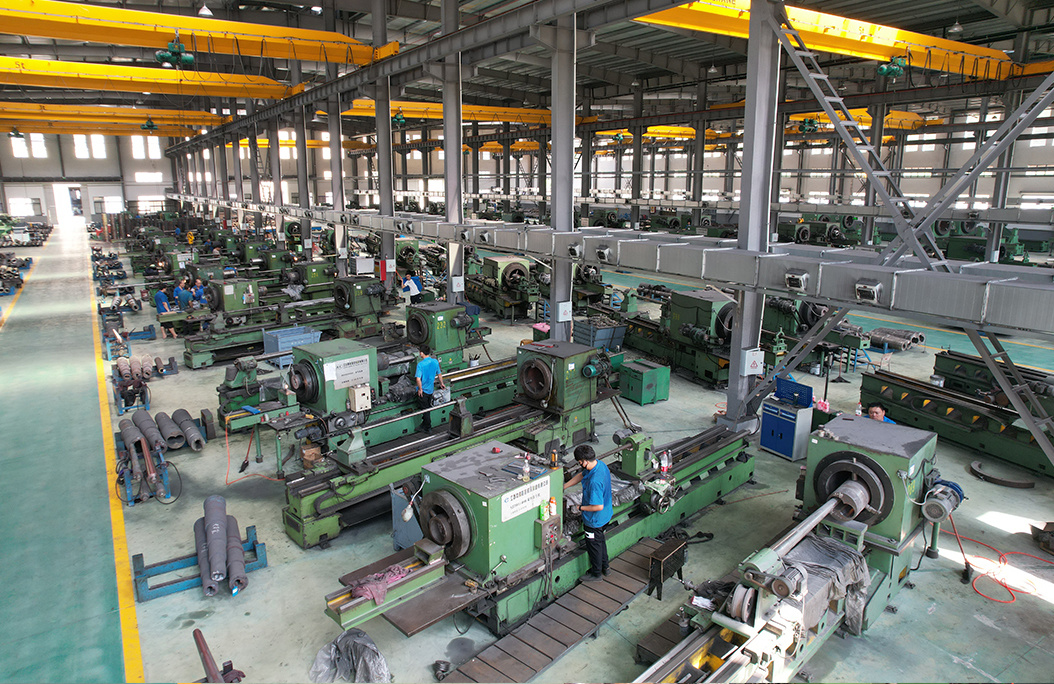
A reliable screw barrel manufacturer must combine material selection, heat treatment, coating technology, and precise machining. Guangyou Screw, operated by Zhejiang Guangming Plastics Machinery Co., Ltd., was established in 1992 and runs a 100,000 m² smart facility with over 800 employees, 25 R&D engineers, and an annual output of 32,000 units. The company exports to over 50 countries and regions, with Europe as a major market. Its manufacturing capabilities include nitrided and bimetallic screw barrels, using processes such as PTA spraying to reach HRC 58–65 hardness and optimized heat treatment for high-torque applications.
2. What screw barrel types and manufacturing capabilities should I check?
Buyers should check whether the manufacturer can supply single screw barrels, twin screw barrels, and bimetallic versions. For extrusion equipment, both conical and parallel twin screw barrels are used depending on the machine design. The supplier should also demonstrate control over steel alloy selection, quenching, tempering, internal stress relief, and surface coating. Guangyou Screw applies optimized steel selection and heat treatment to control screw shaft fracture risk, and uses metallurgical alloy coating and nitriding treatment to address wear and corrosion.
3. How does the cost of nitrided and bimetallic screw barrels compare over time?
The initial cost of a bimetallic screw is approximately 25% higher than that of a traditional nitrided screw and barrel. However, due to fewer replacements, the total cost of ownership over 3 years is reduced by 50%. The economic decision depends on how often the barrel would otherwise be replaced. In highly abrasive applications, the bimetallic option is usually the lower-cost choice over a full service period.
4. Can I test a screw barrel sample before placing a production order?
Sample orders can be arranged with most manufacturers, especially when the buyer provides the screw drawing and barrel specification. Testing the actual material grade, coating hardness, and fit before mass production reduces technical risk. Buyers should share the expected polymer formulation and output requirements so the test sample matches the real application.
5. What is the typical lead time for screw barrel production and delivery?
Lead time depends on material availability, heat treatment scheduling, machining complexity, and the coating process. Custom bimetallic barrels may take longer because of the alloy coating and hardening steps. Since delivery time directly affects production planning, it is advisable to confirm the current production schedule with the manufacturer. For an accurate lead time and commercial proposal, contact Guangyou Screw directly with your specification.
Conclusion
The choice between nitrided and bimetallic screw barrels should be based on the full production condition and cost model. Nitrided barrels are suitable for clean, standard formulations where the initial cost must stay low. Bimetallic barrels provide a longer service life, lower wear rate, more stable output, and reduced 3-year total cost of ownership, and they are the better option for recycled plastics, high glass-fiber compounds, and high-filler PVC/CaCO3.
When evaluating suppliers, check the actual manufacturing process: steel grade, heat treatment, coating hardness, and quality control. Guangyou Screw offers both nitrided and bimetallic screw barrels, with a 100,000 m² factory, CNC machining, German-imported inspection technology, and digital ERP/MES systems to support consistent quality.
For a detailed product catalogue and technical specification, download the Guangyou Screw catalogue (PDF).
Contact: Martin — info@gmscrew.com | Tel/WhatsApp: +86 13858143949
Have Questions or Need More Details?
Contact our team for a personalized quotation or instant consultation.
Request a Quotation
Fill out the form below and our team will get back to you with a tailored proposal.
WhatsApp Direct Chat
Prefer to chat in real-time? Message us on WhatsApp for instant assistance & quick answers.
- Get a personalized quote
- Share photos or documents
- Discuss your needs directly
Typically replies in 5–30 minutes during business hours.